Calico
Traces of Making
Calico explores the relationship between craft, industry and technological evolution.
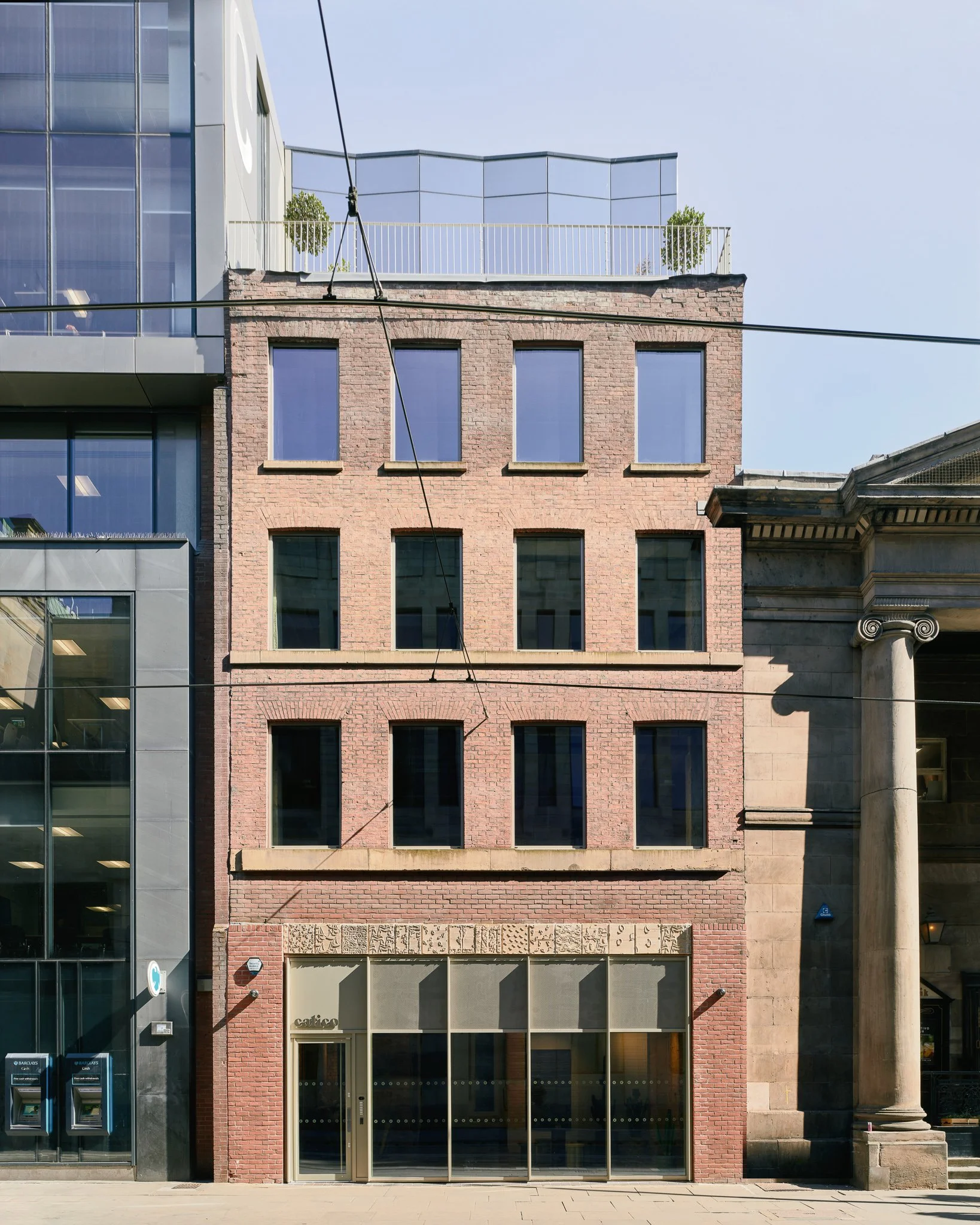
Created for a building that takes its name from Manchester's historic calico printing industry, the project responds to a site shaped by production, pattern and material transformation. Once associated with the printing of cotton textiles, the building occupies a position within the wider story of Manchester's industrial heritage; a city whose identity was forged through manufacturing, innovation and making.
The project considers how those histories continue to resonate within contemporary creative practice.
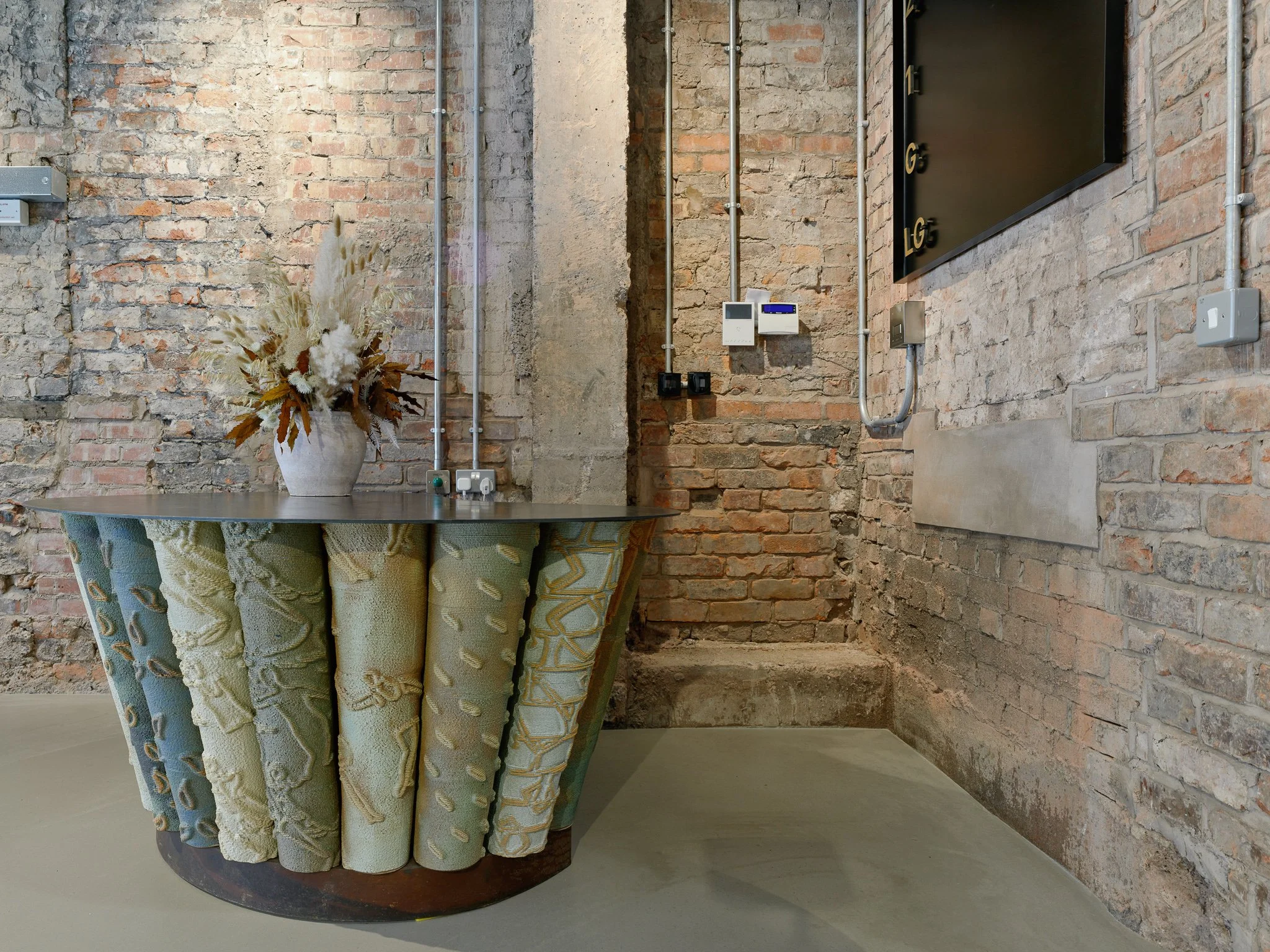
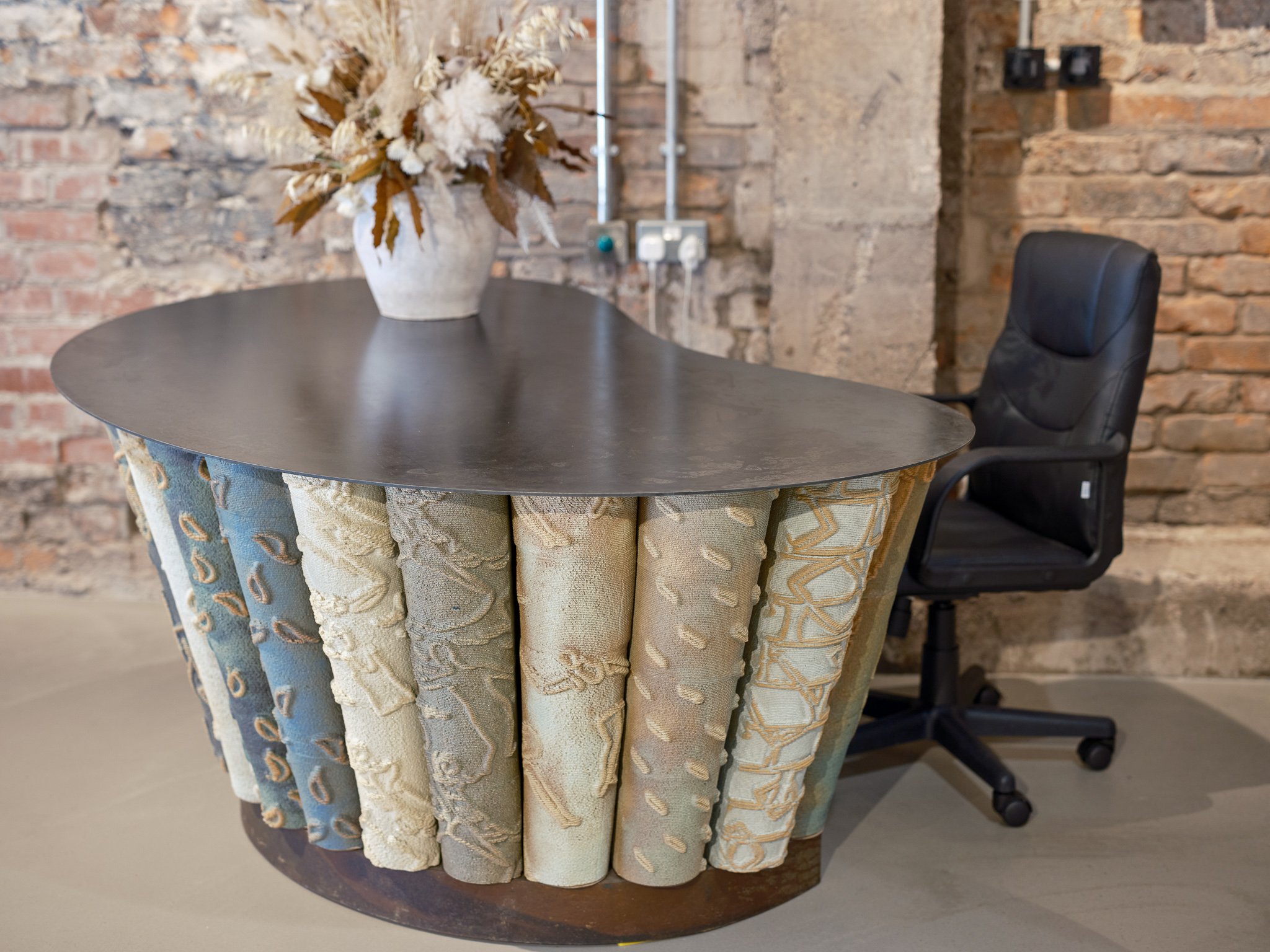
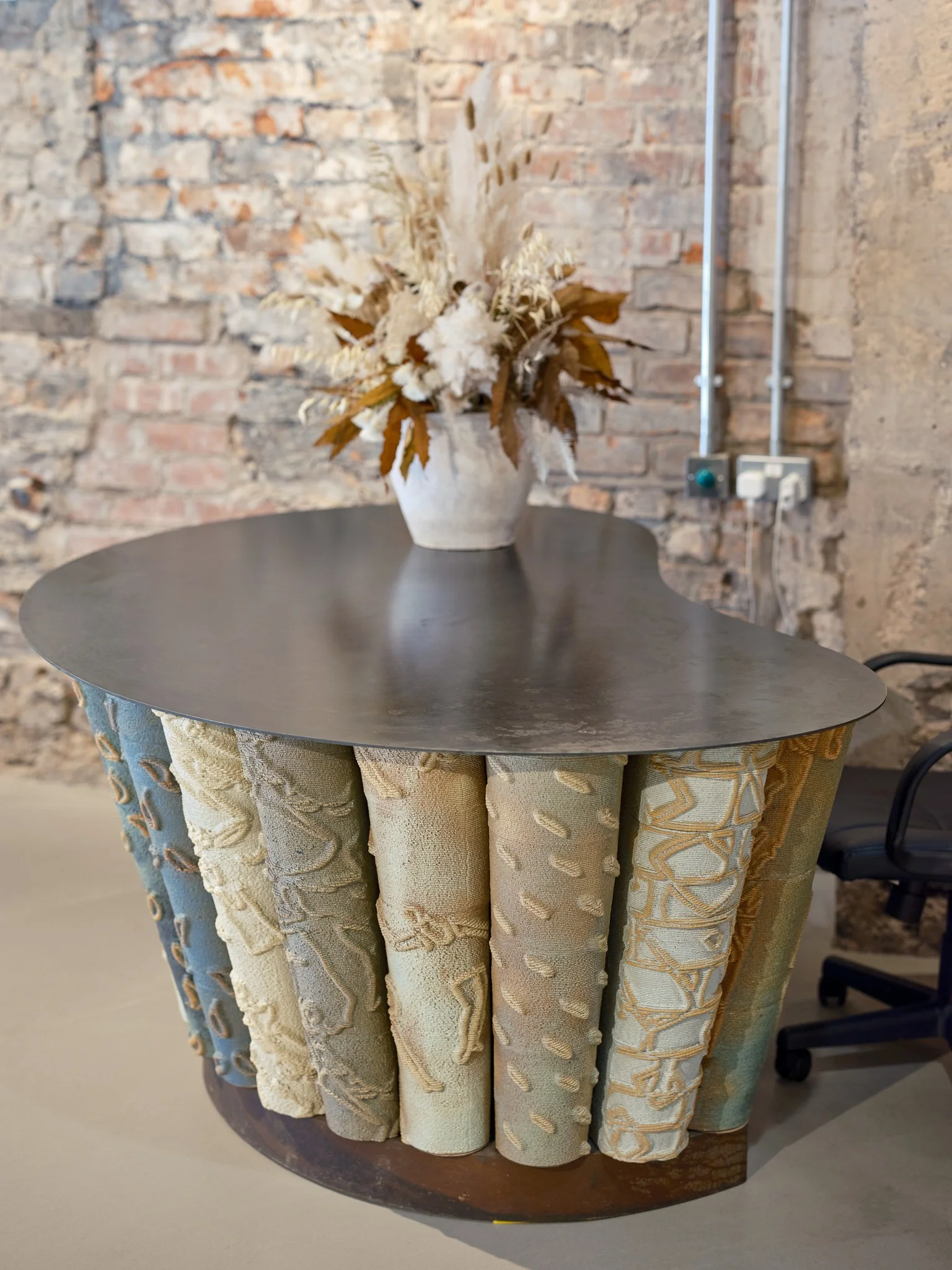
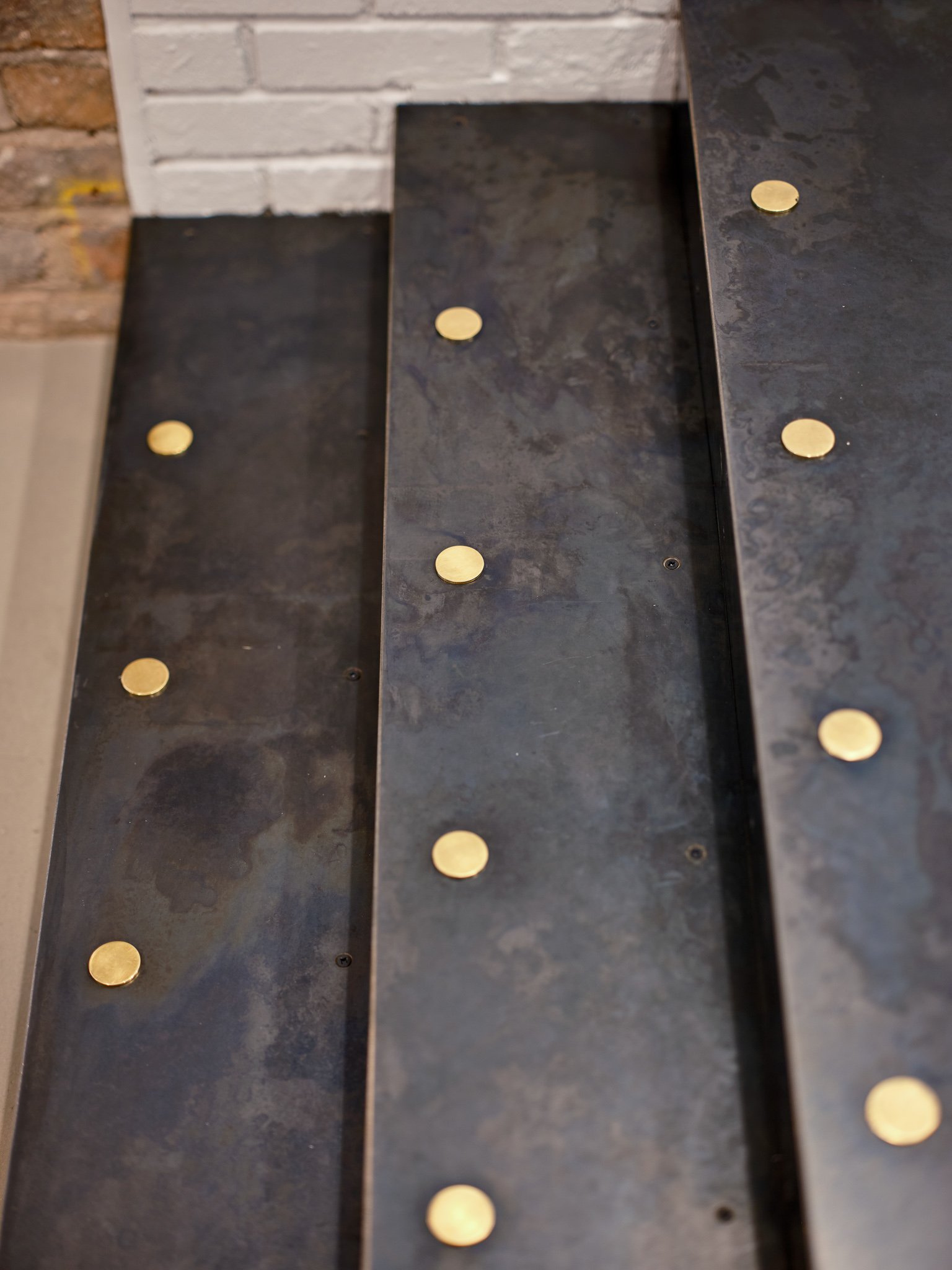
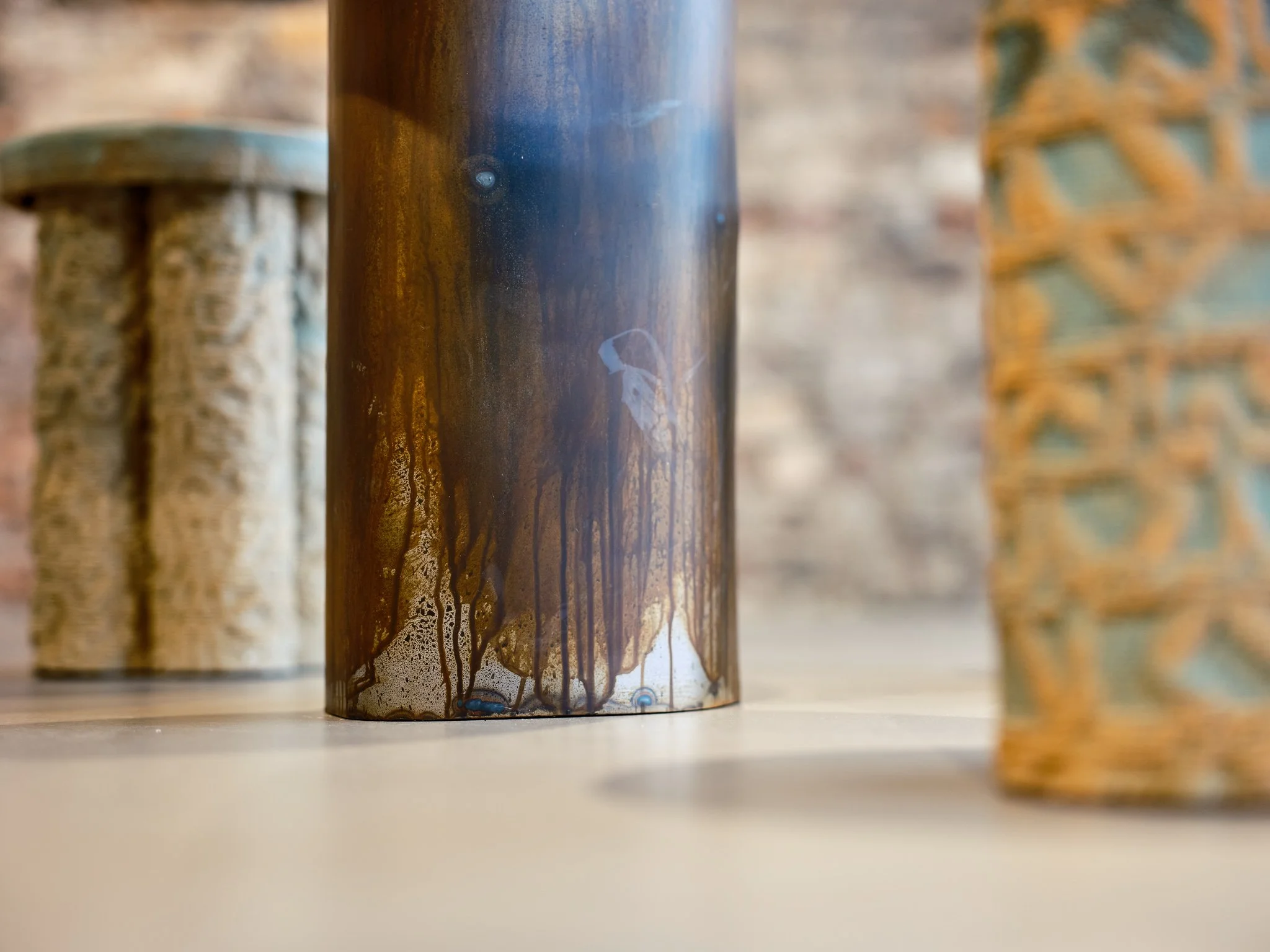
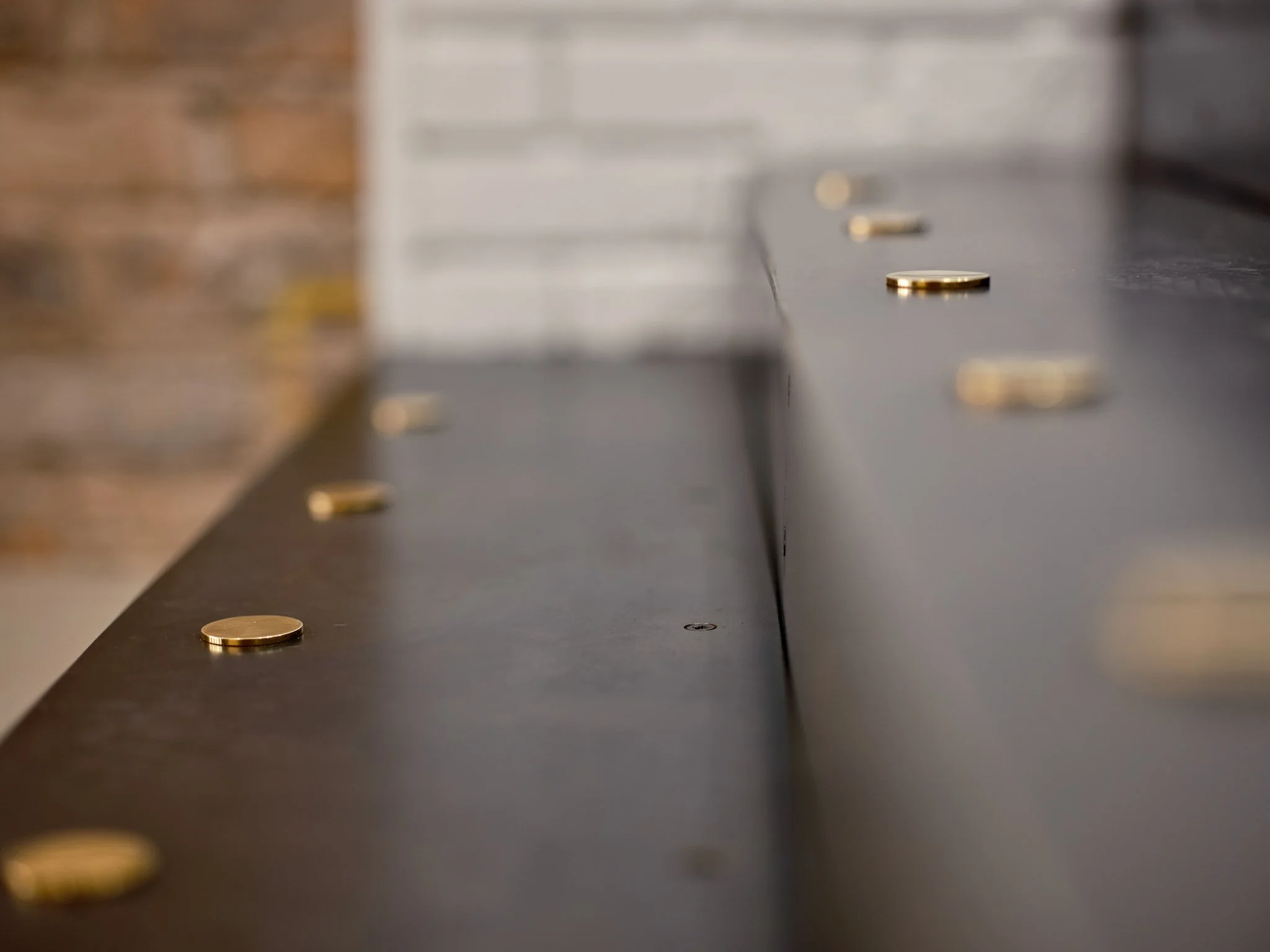
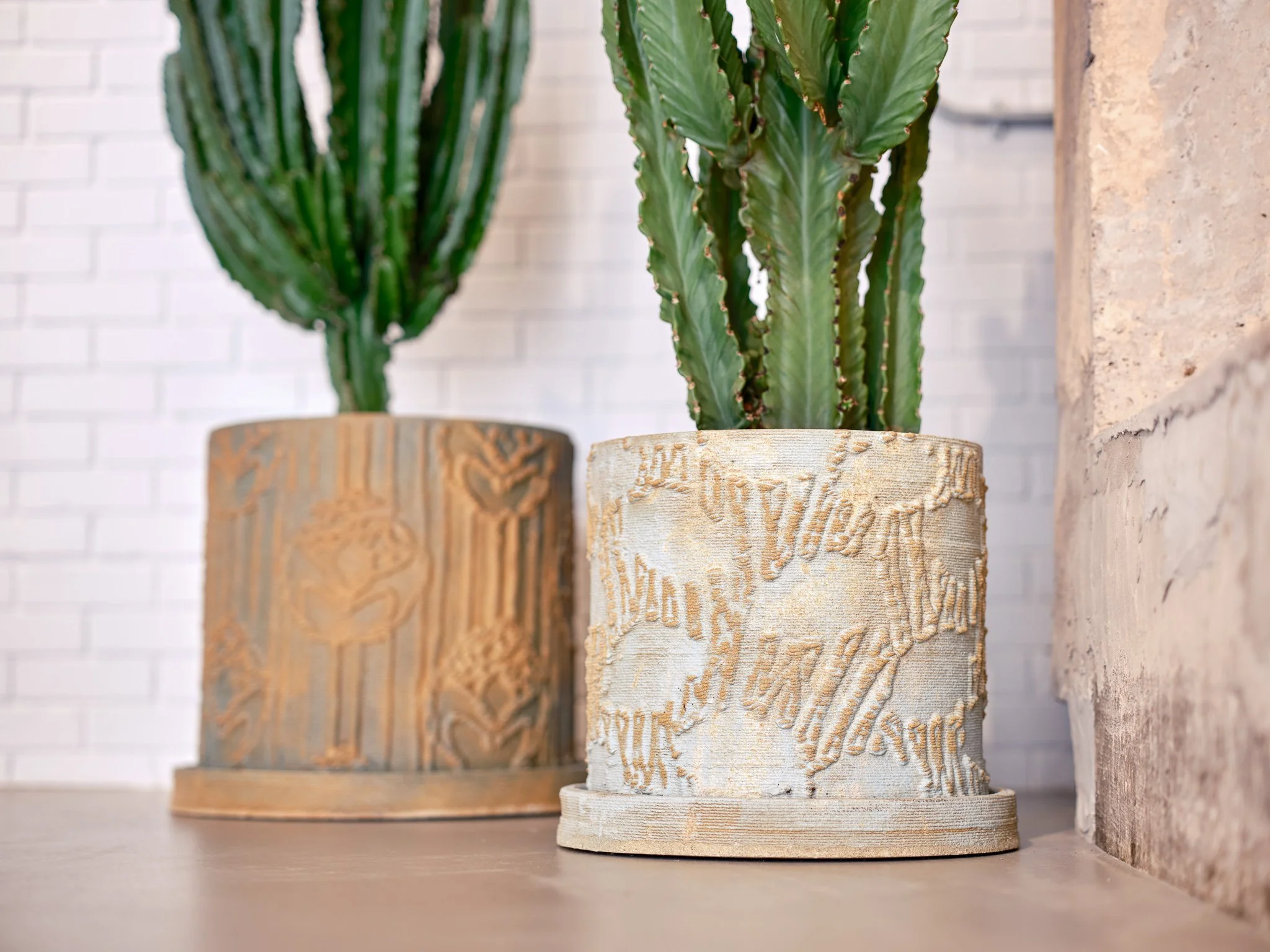
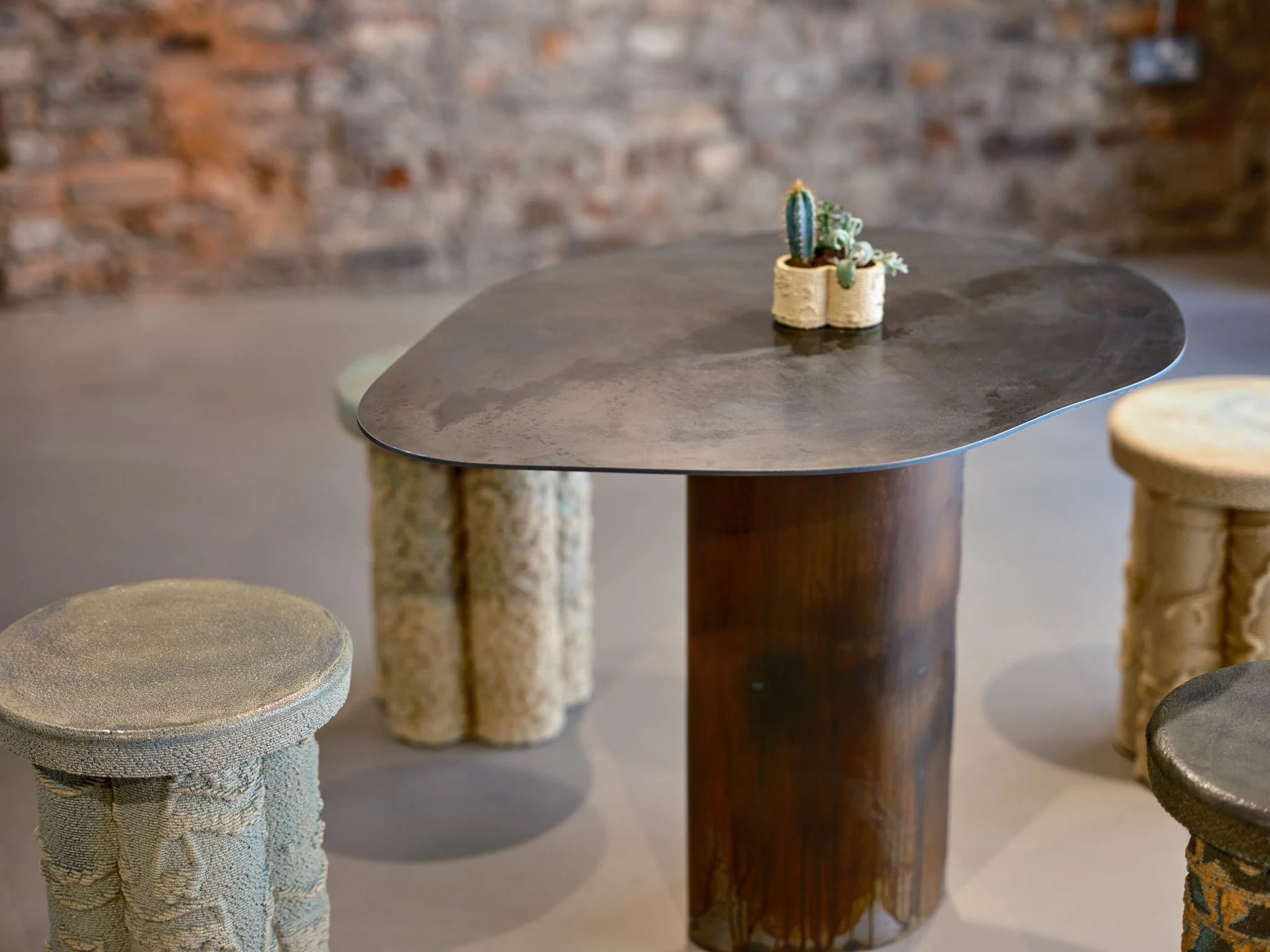
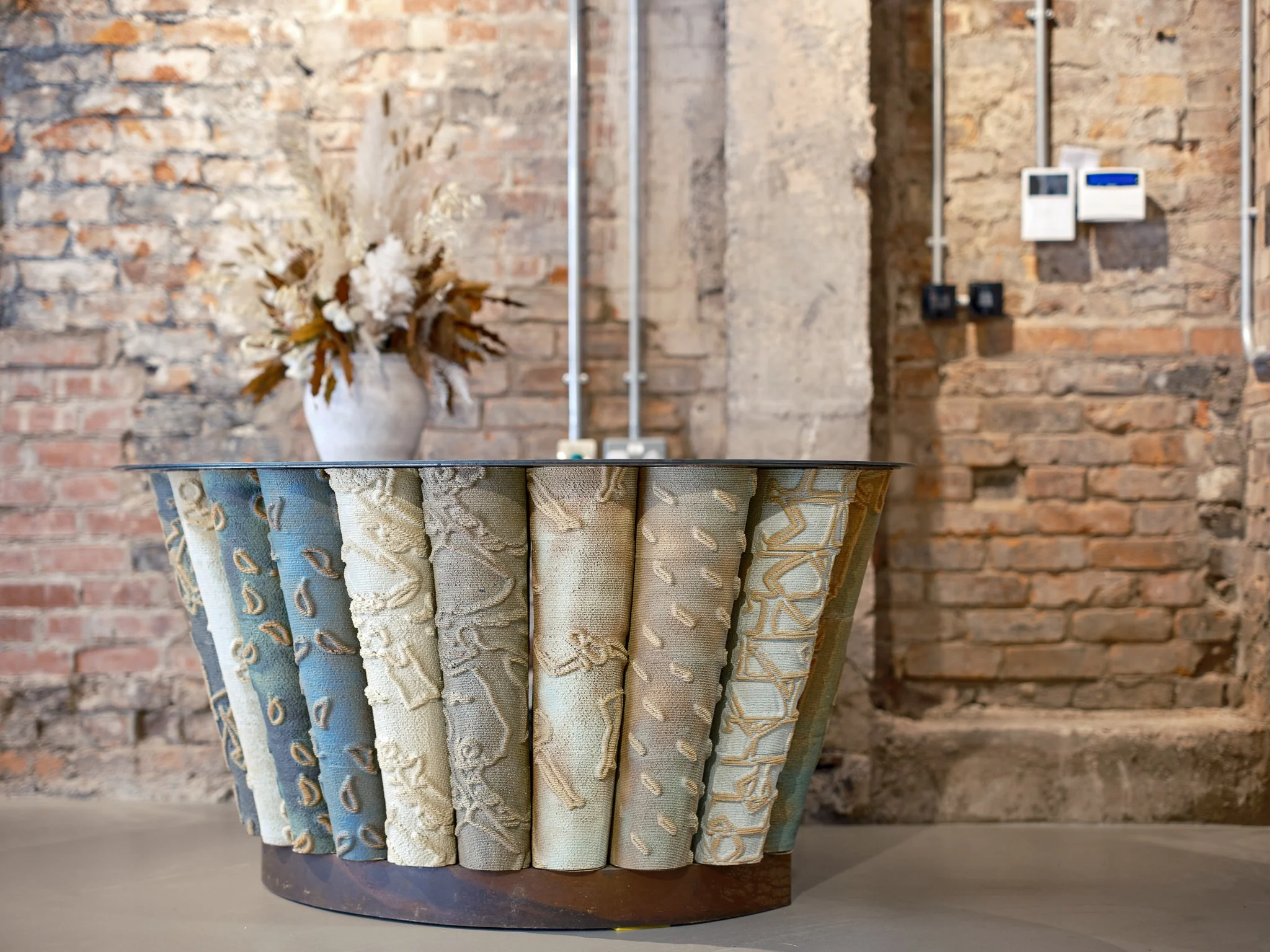
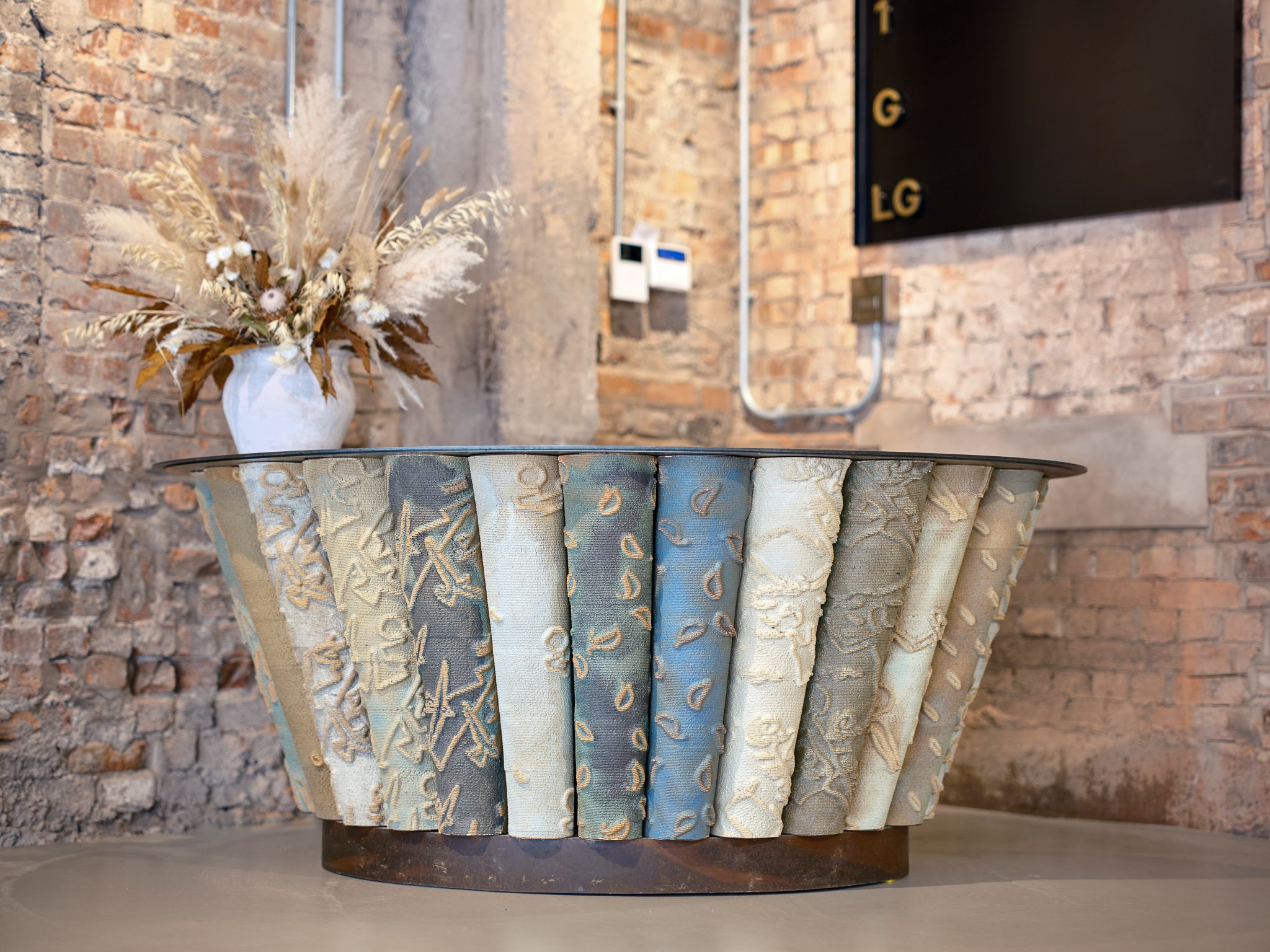
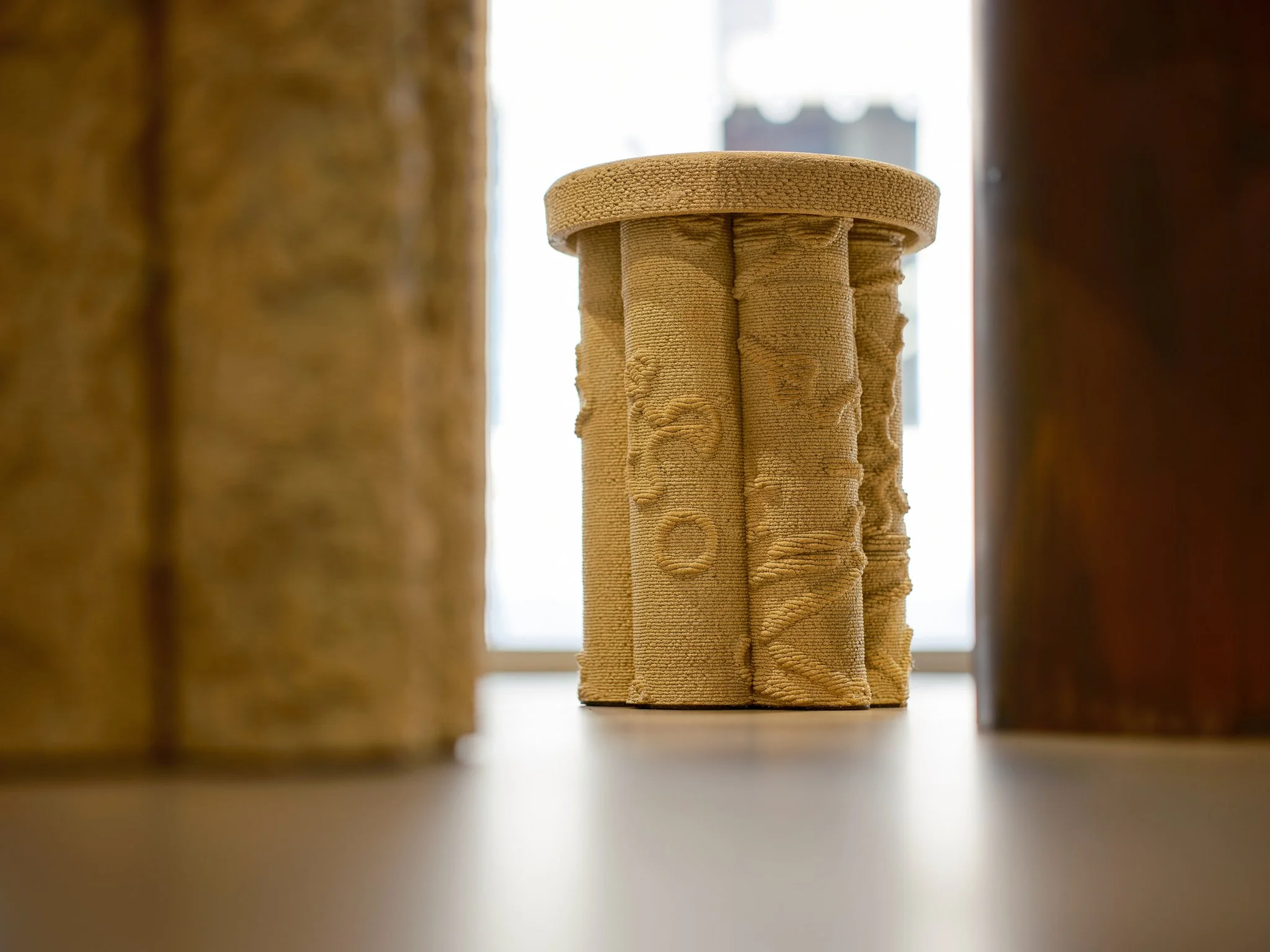
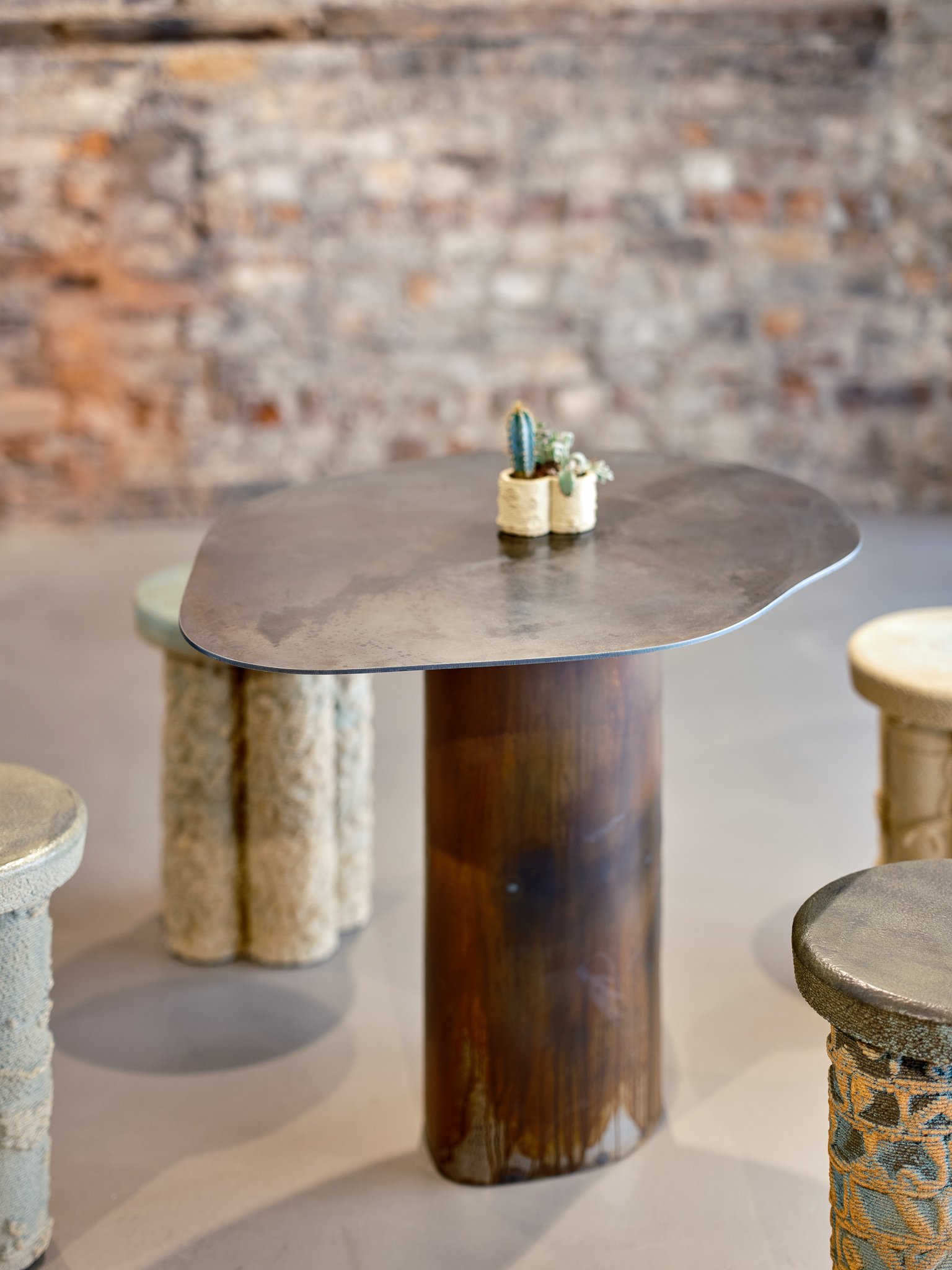
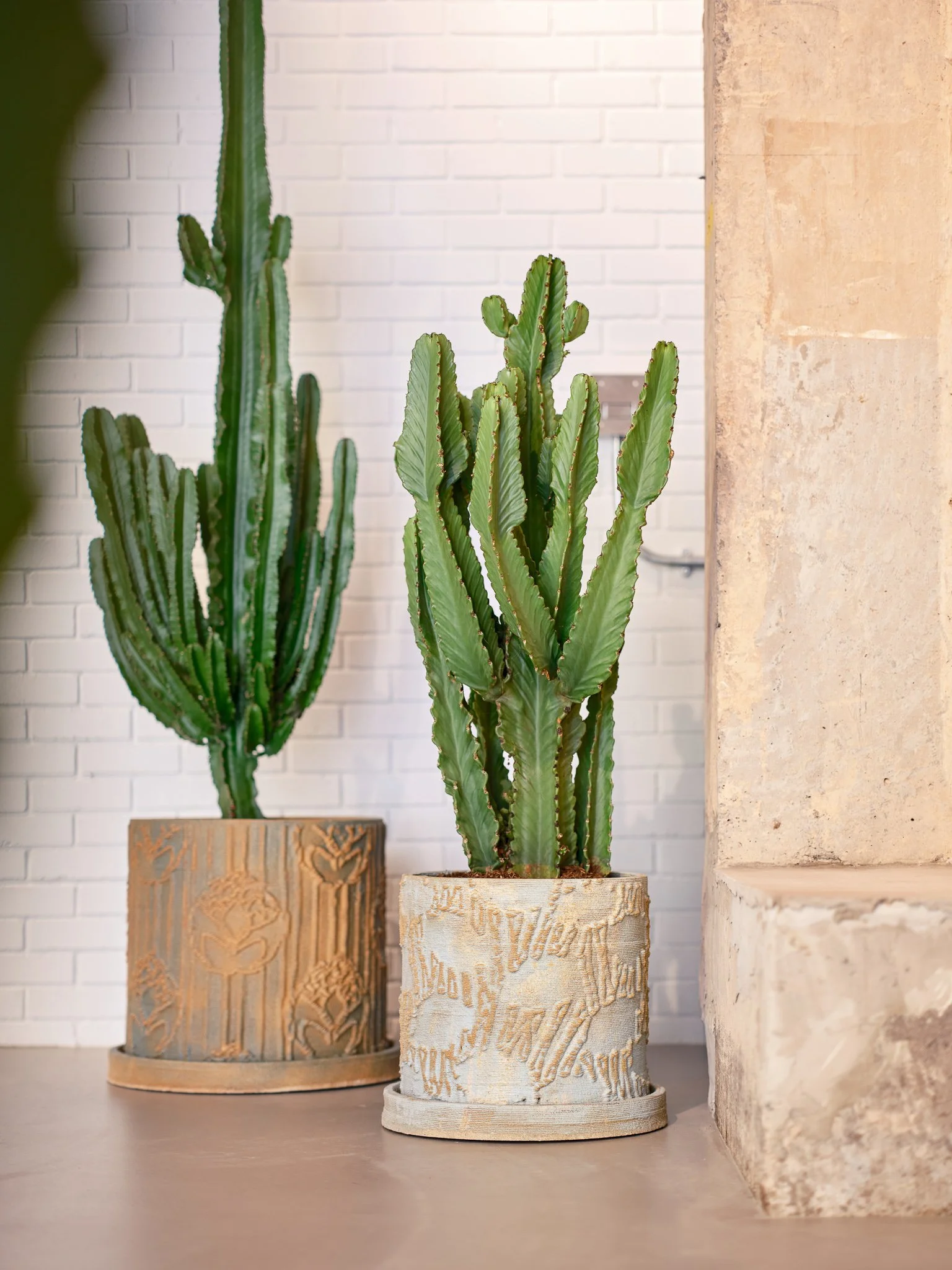
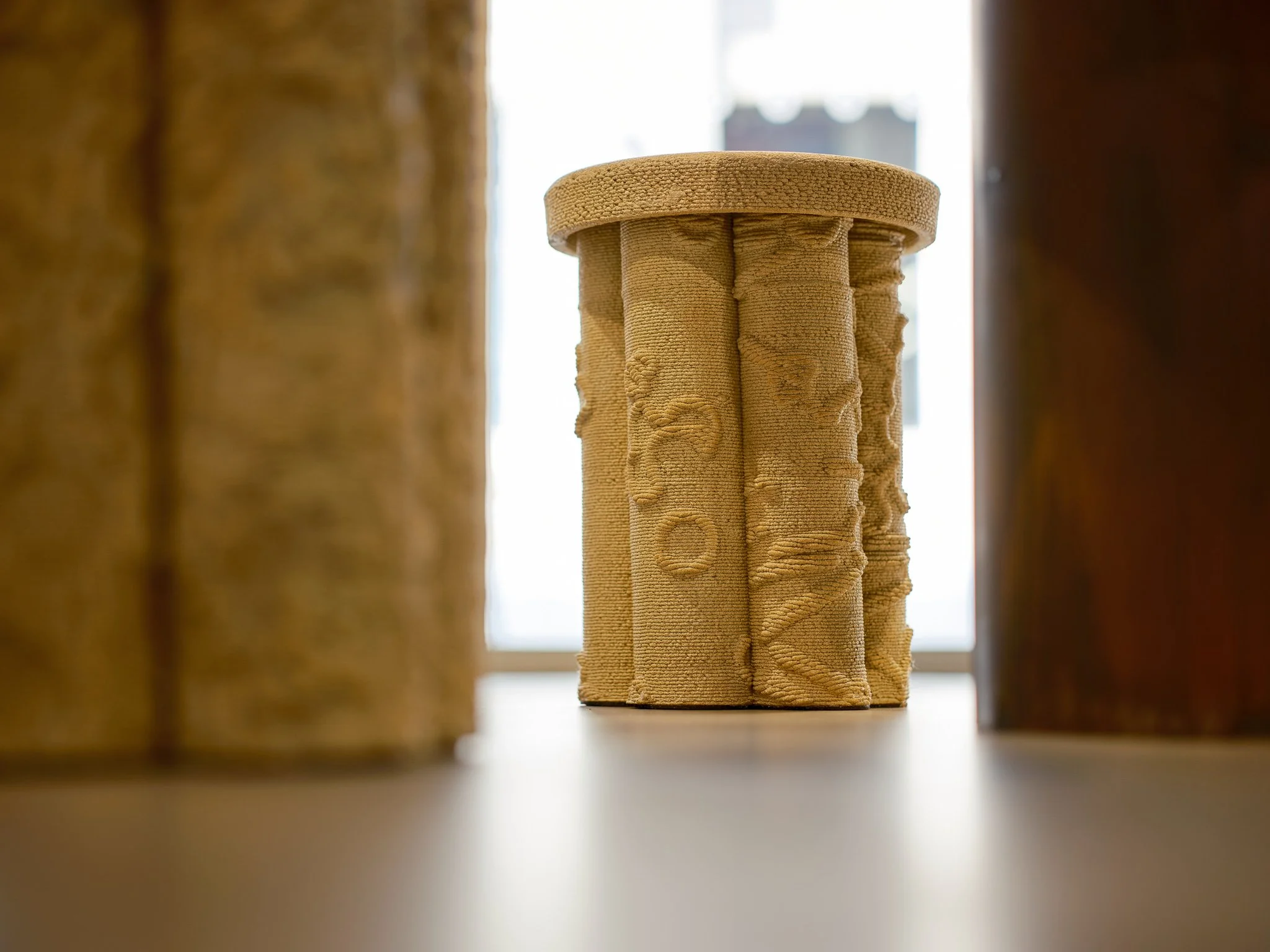
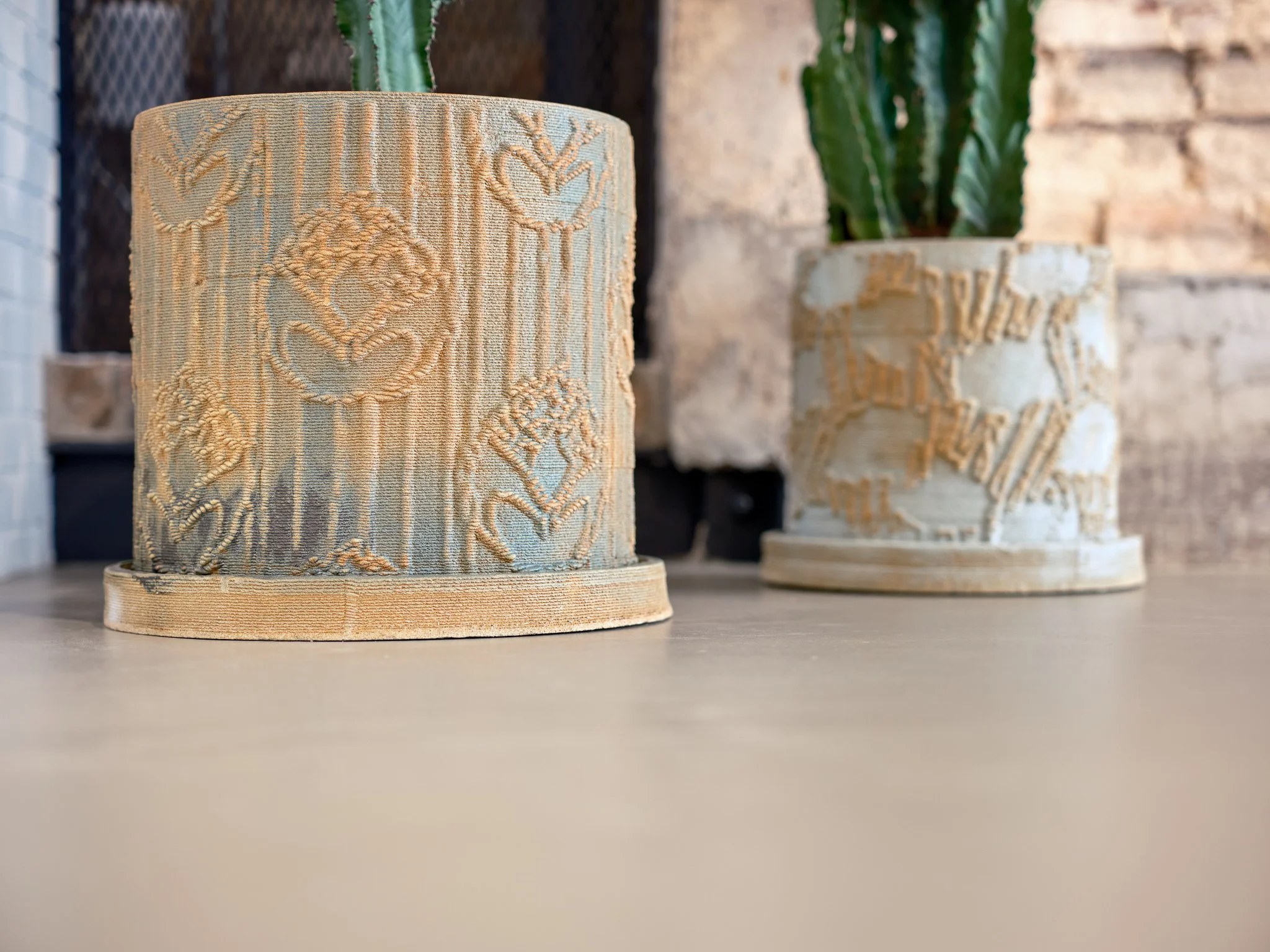
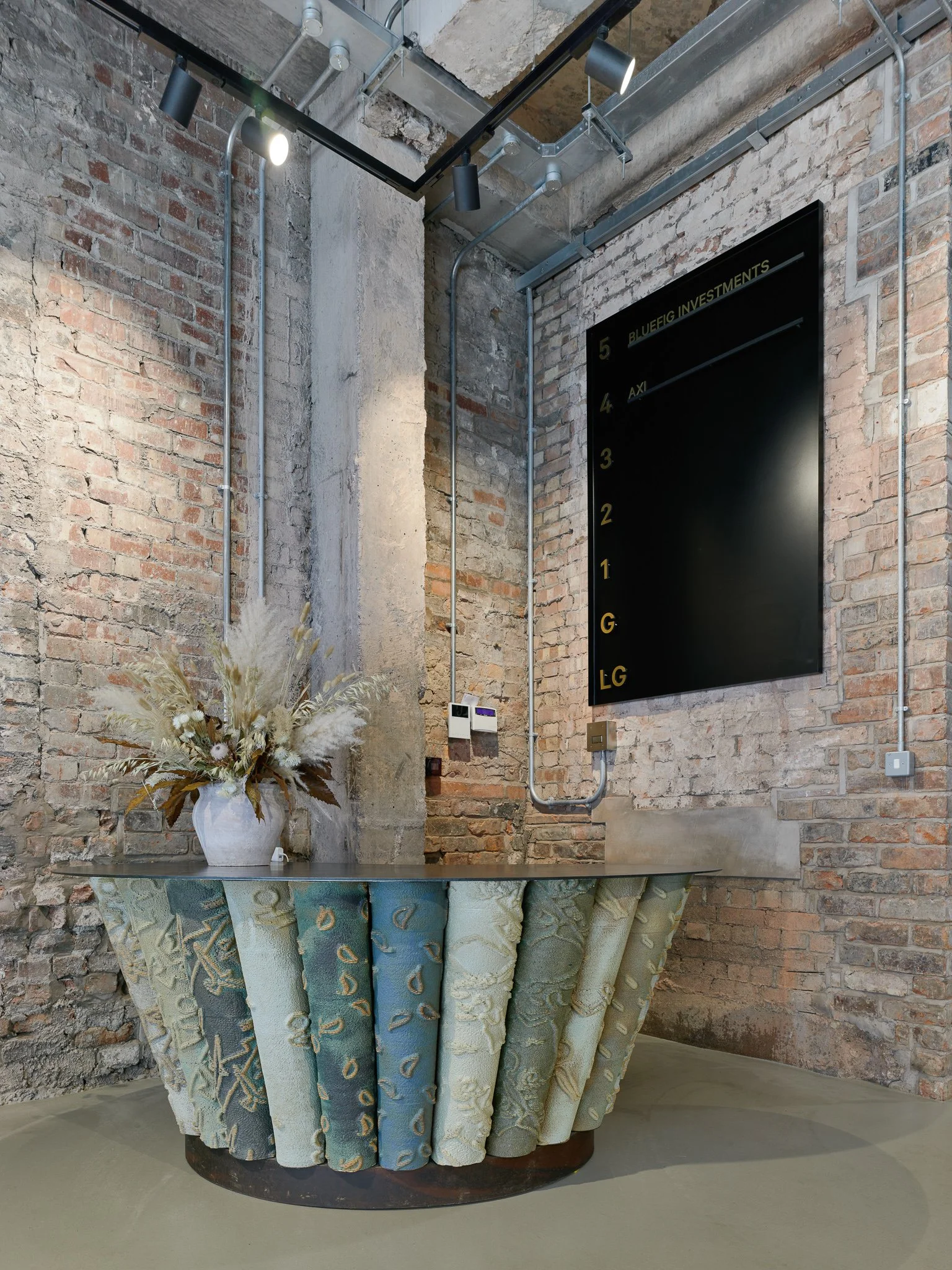
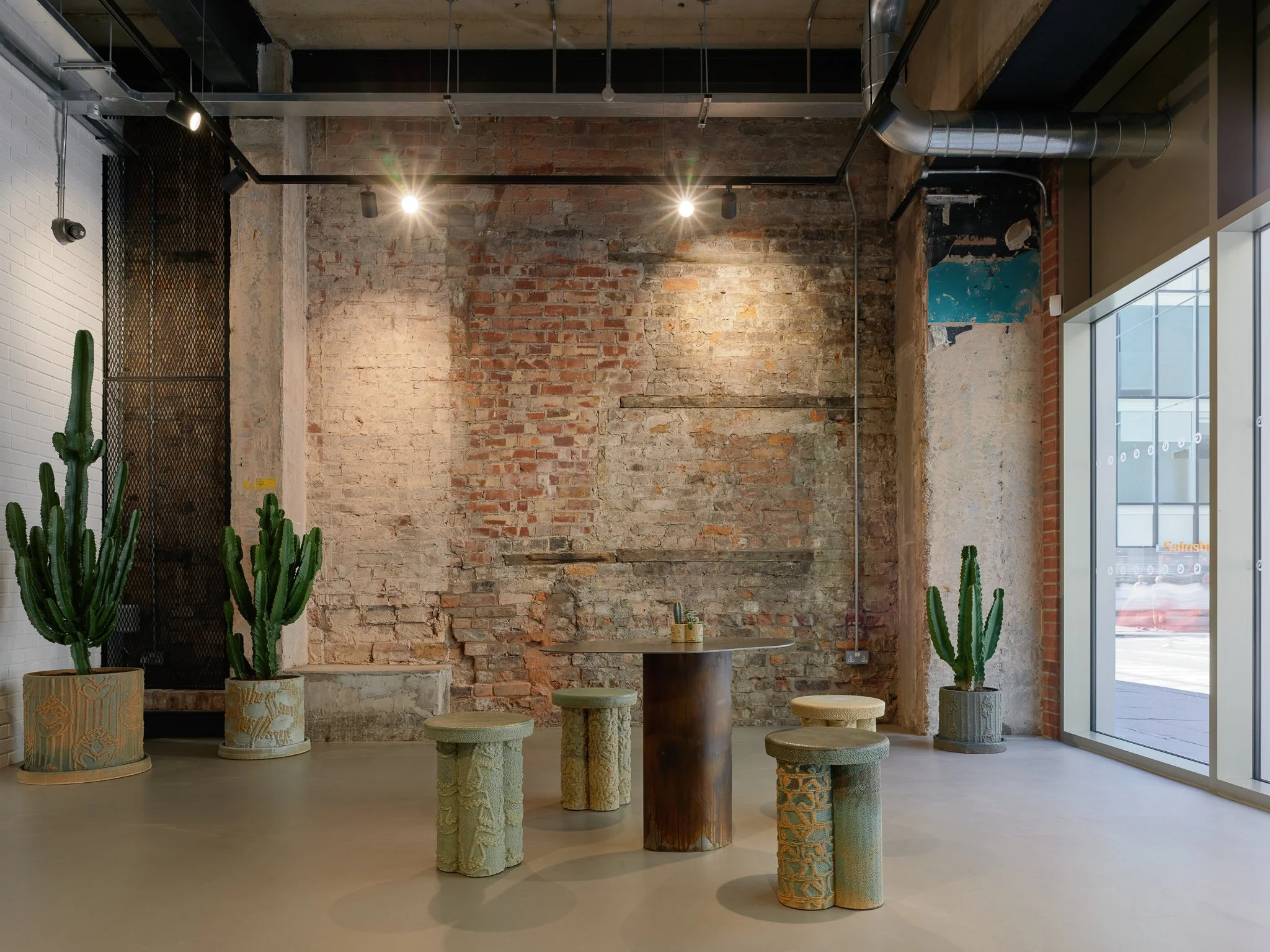
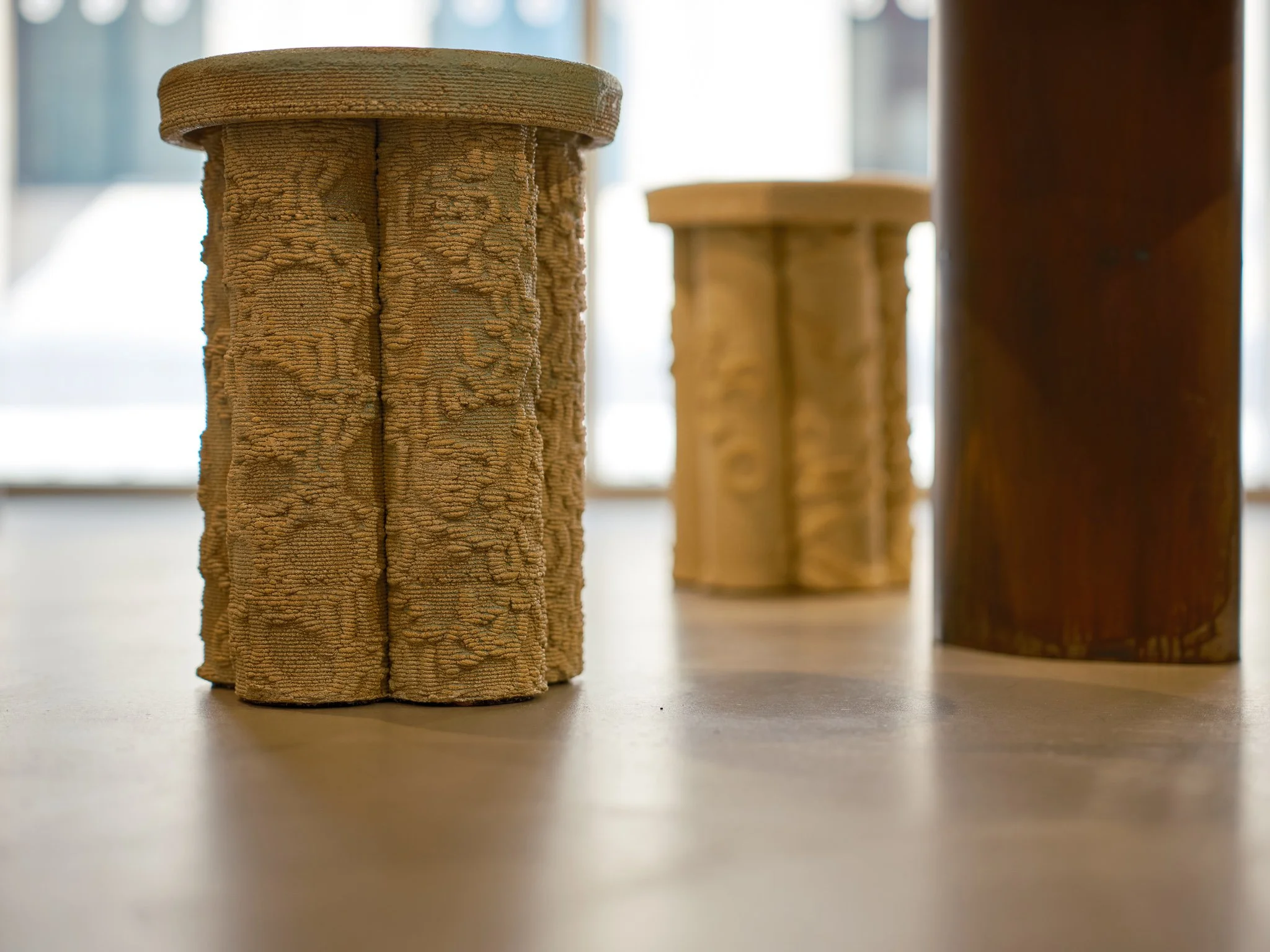
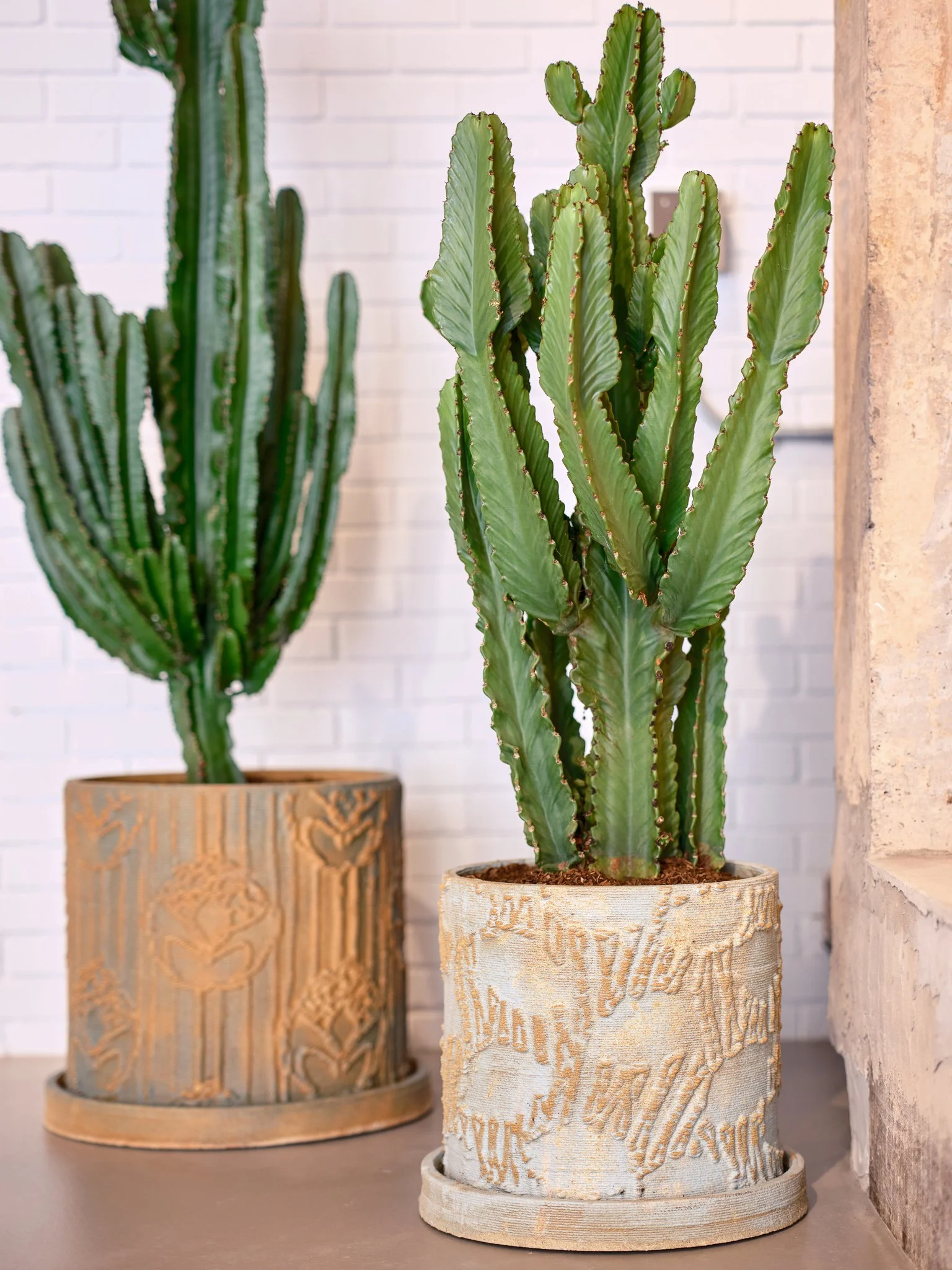
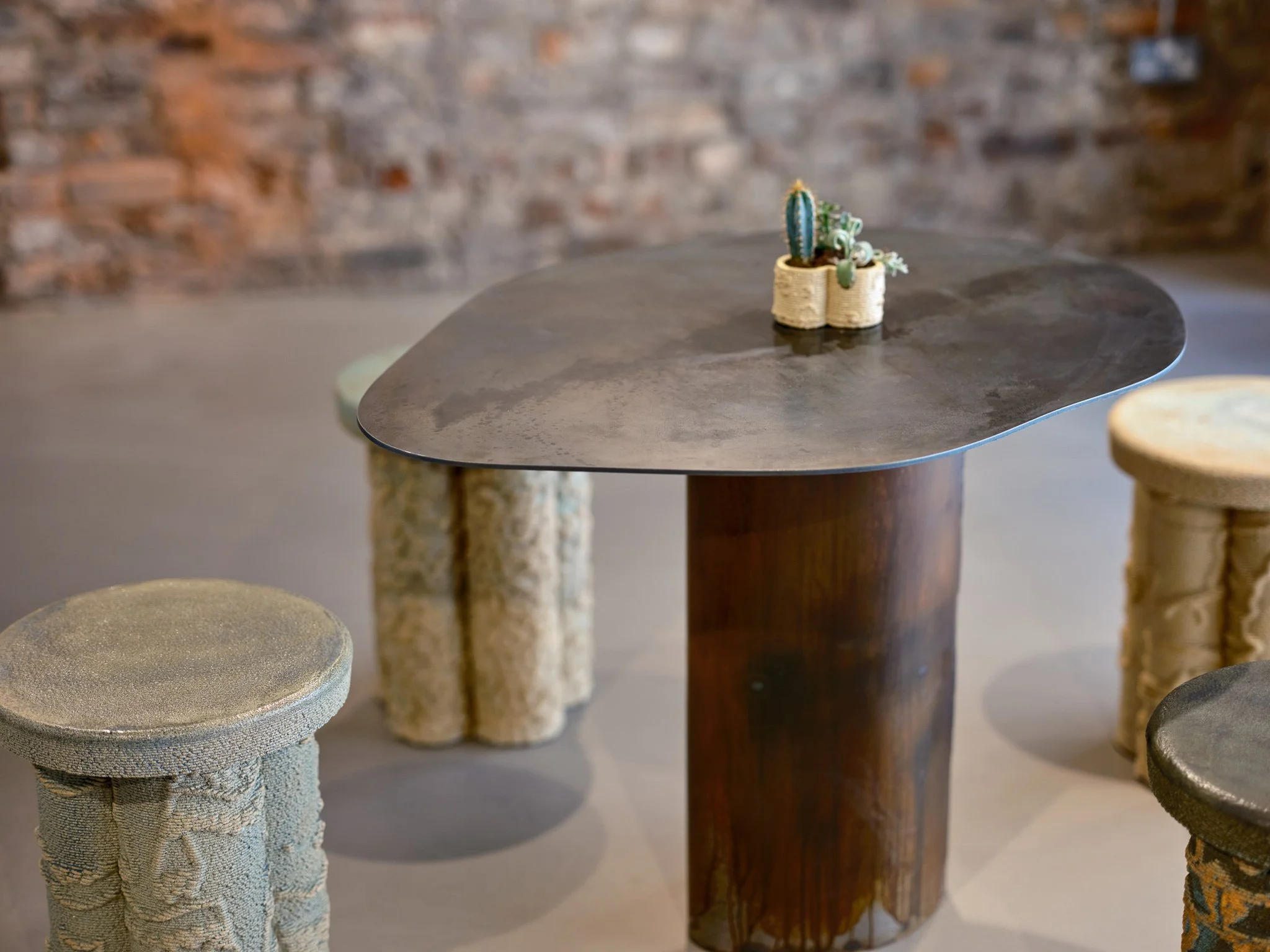
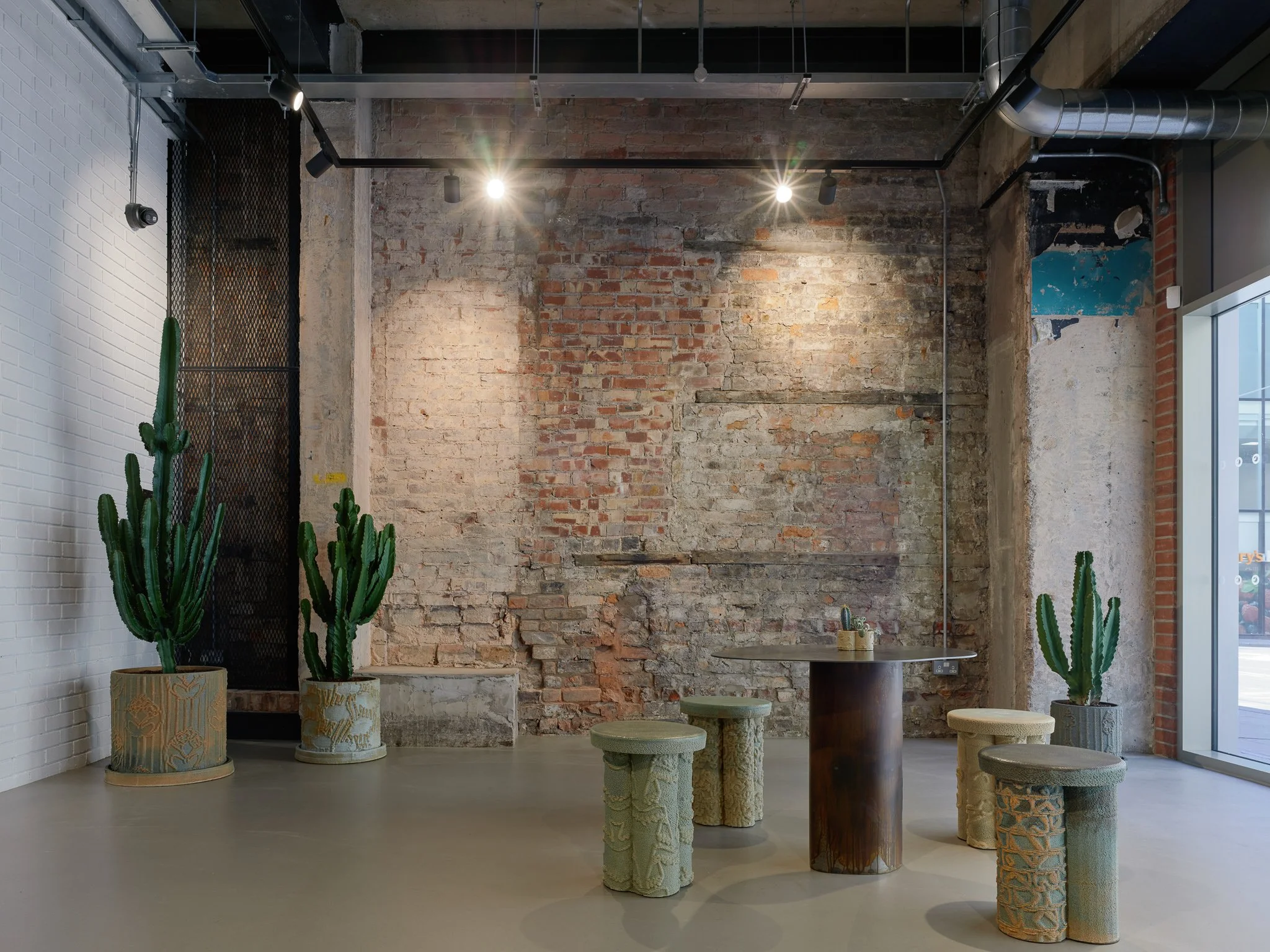
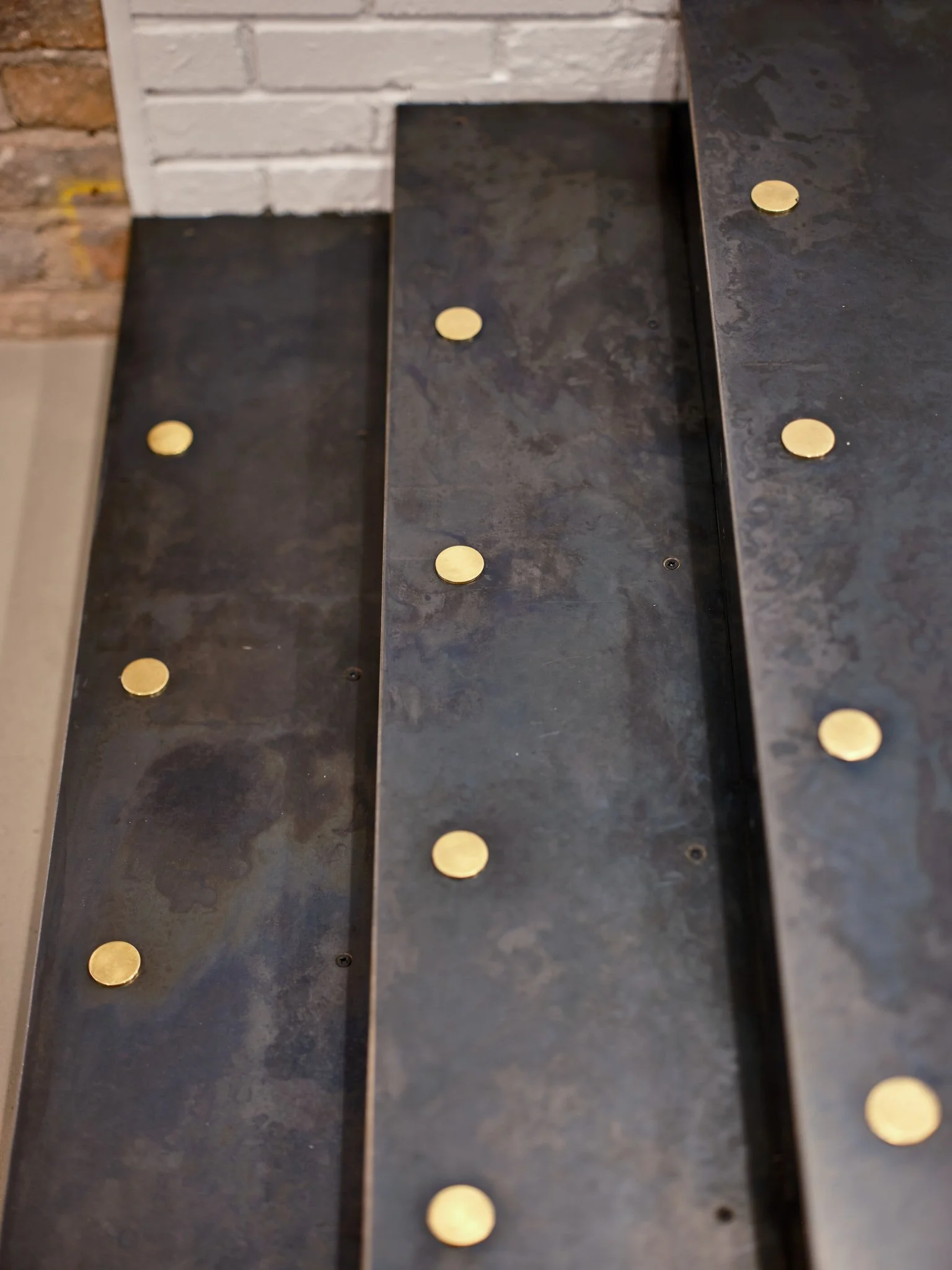
Spanning a collection of architectural interventions, including a reception desk, furniture, planters and ceramic façade elements, the work transforms references from the building's industrial past into a new material language. Rather than recreating historic forms, it seeks to reinterpret the textures, processes and traces left behind by generations of production.
Surface becomes a central theme throughout the work.
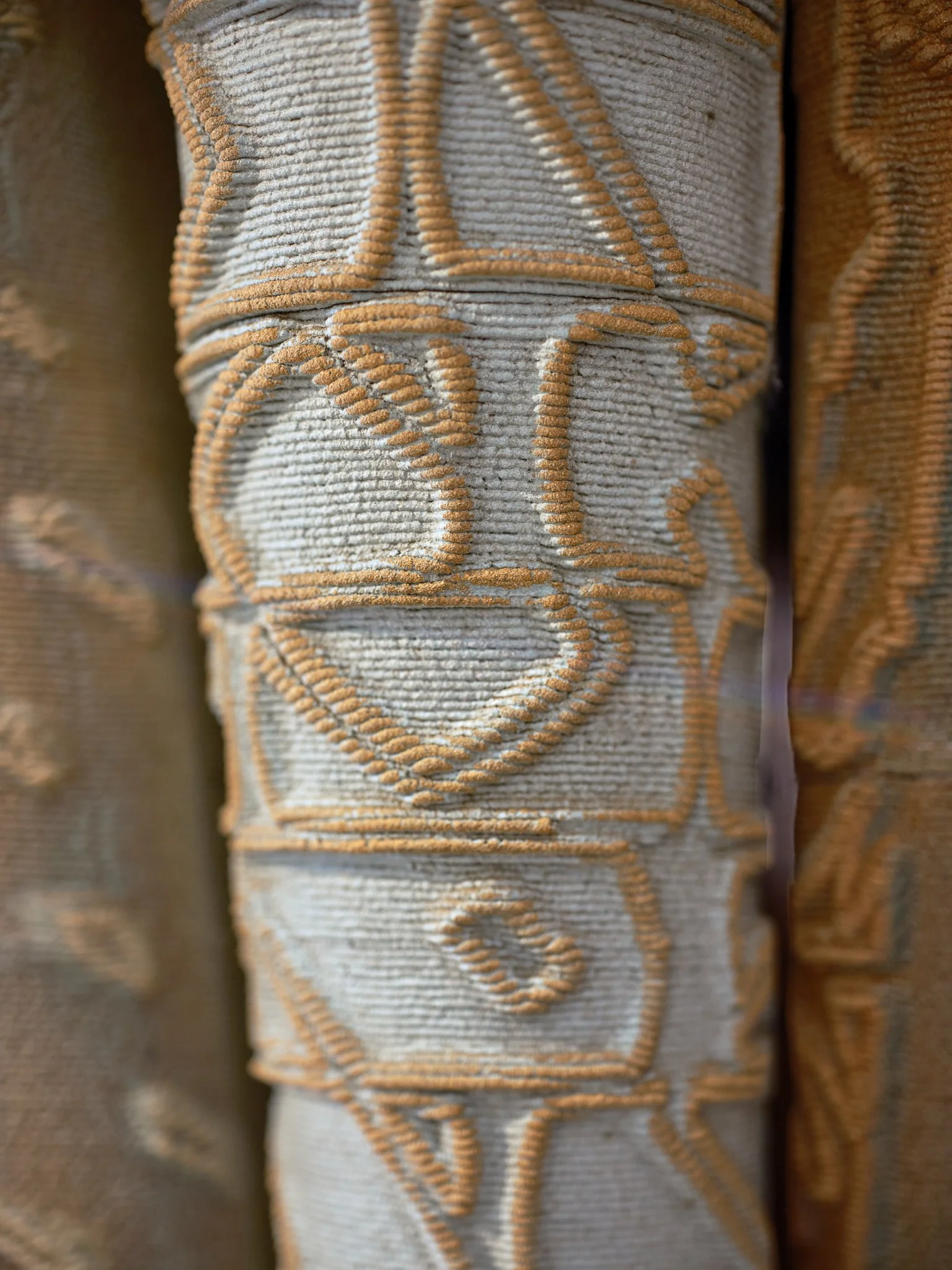
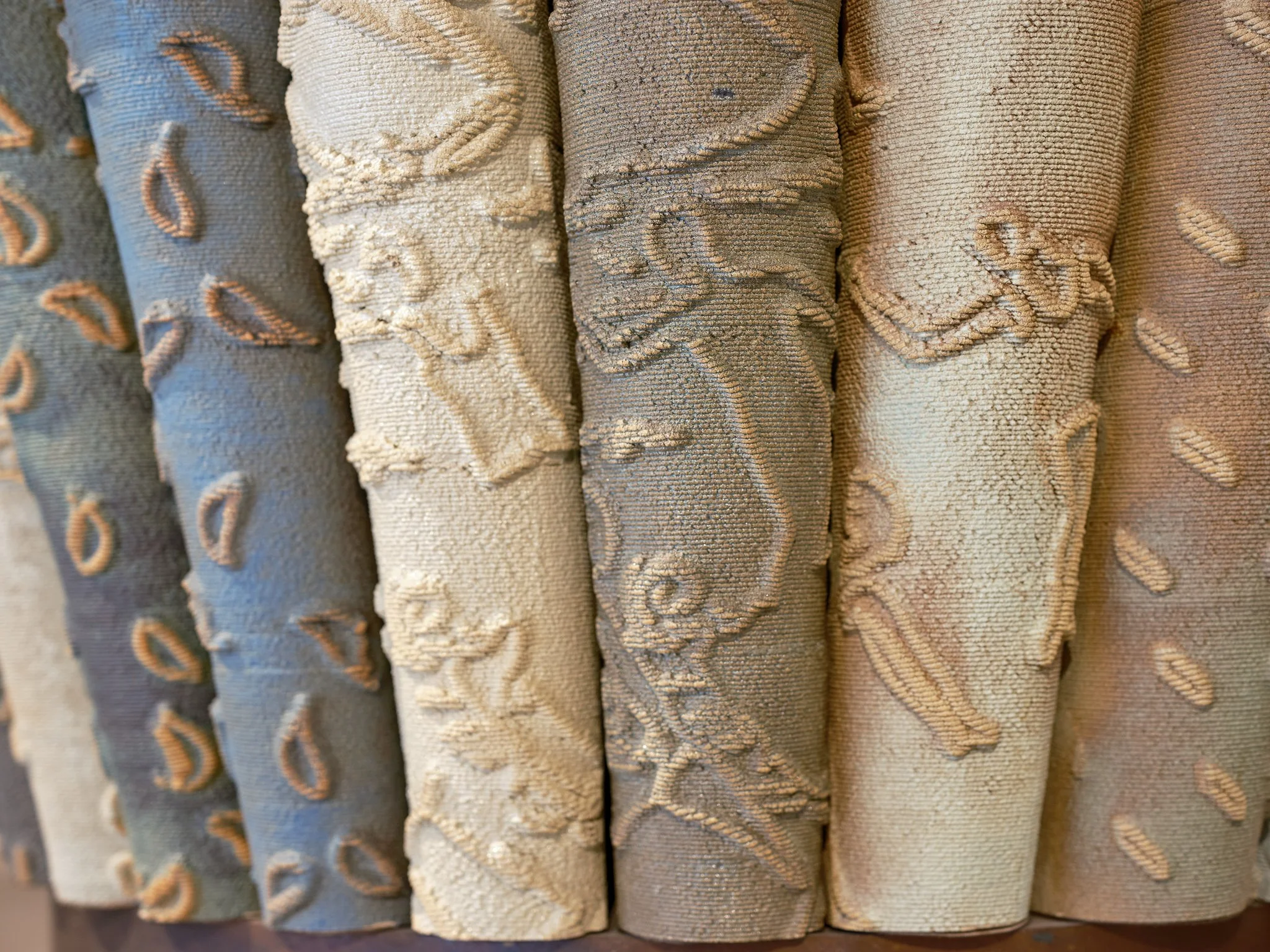
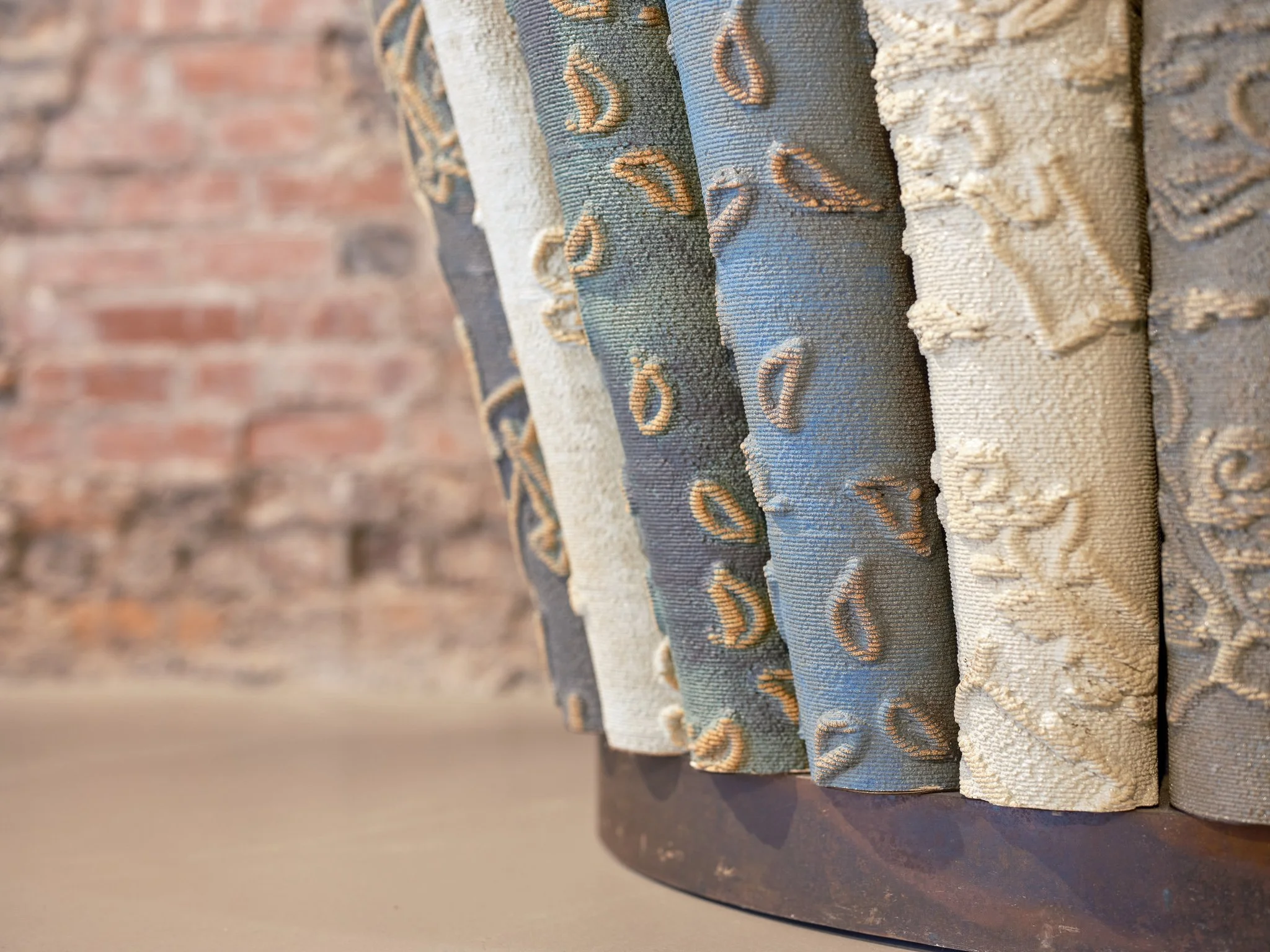
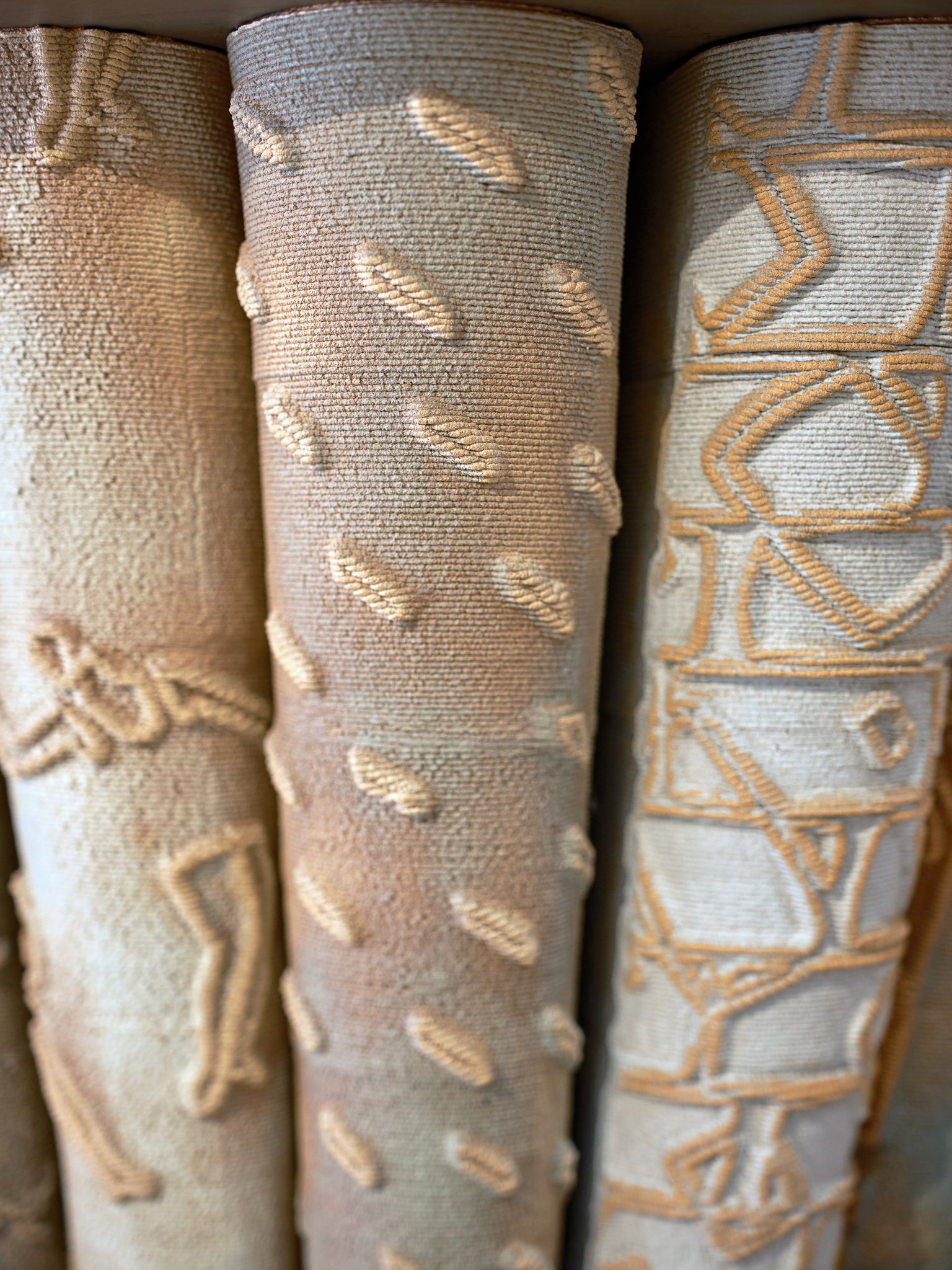
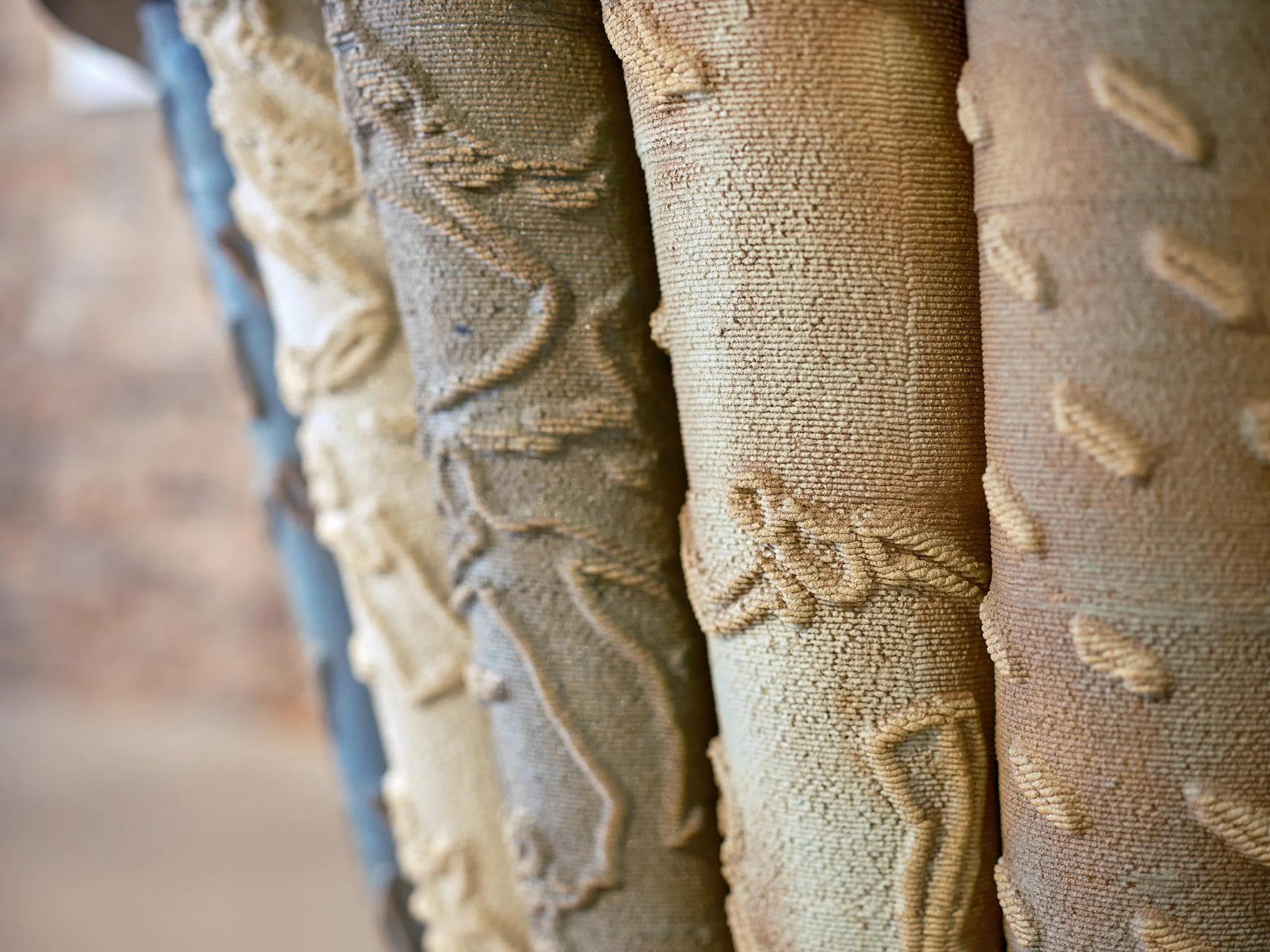
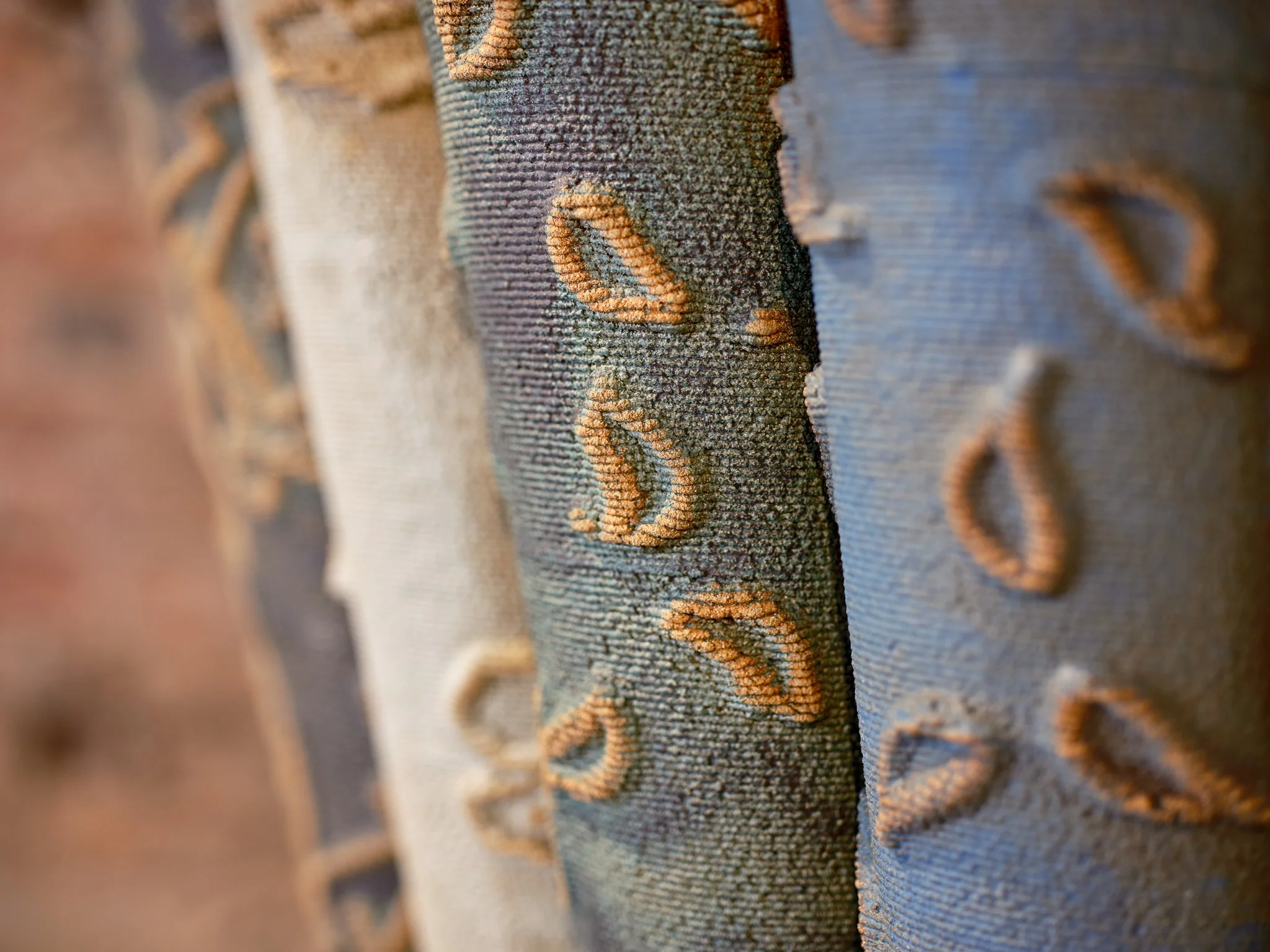
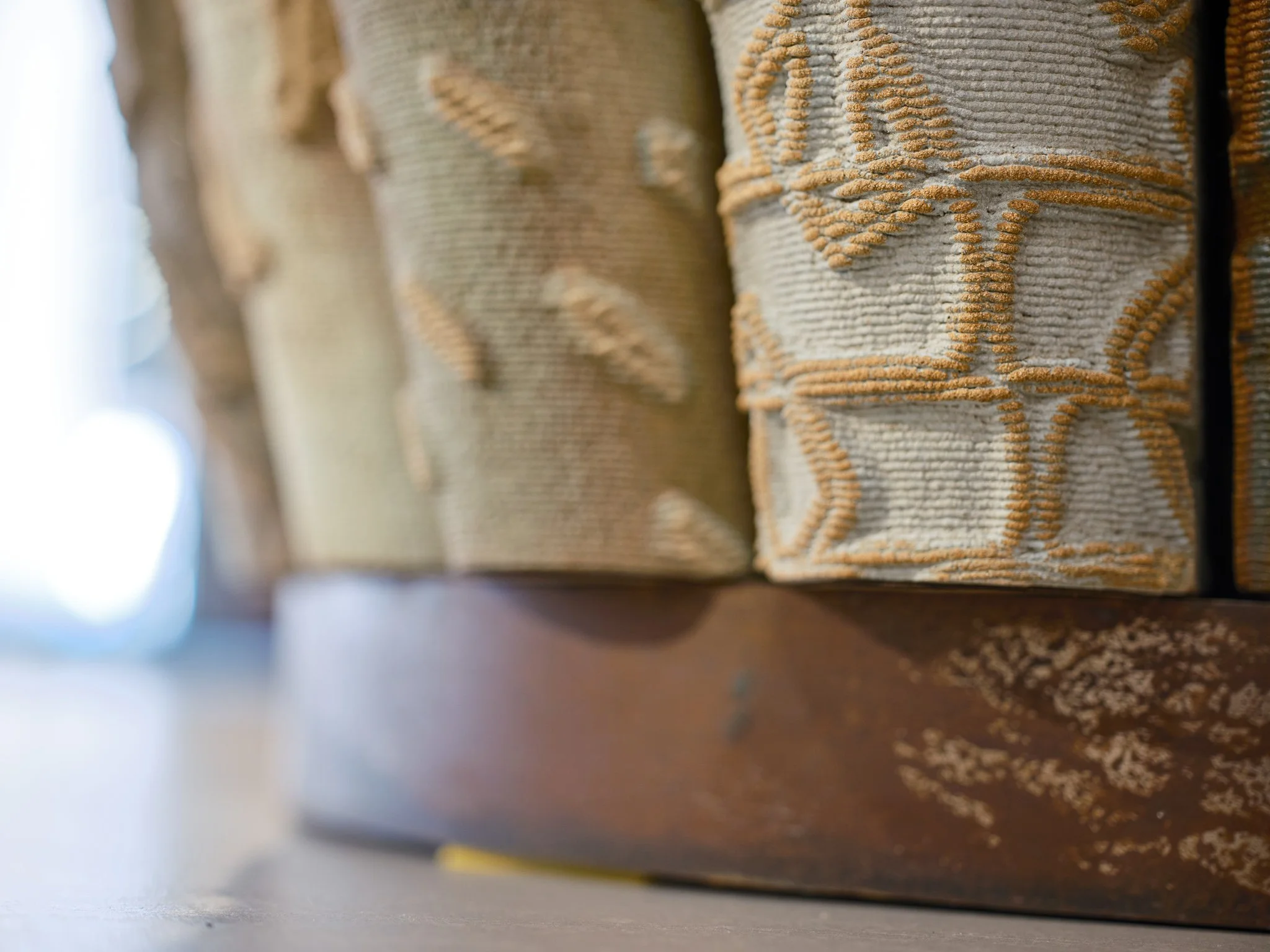
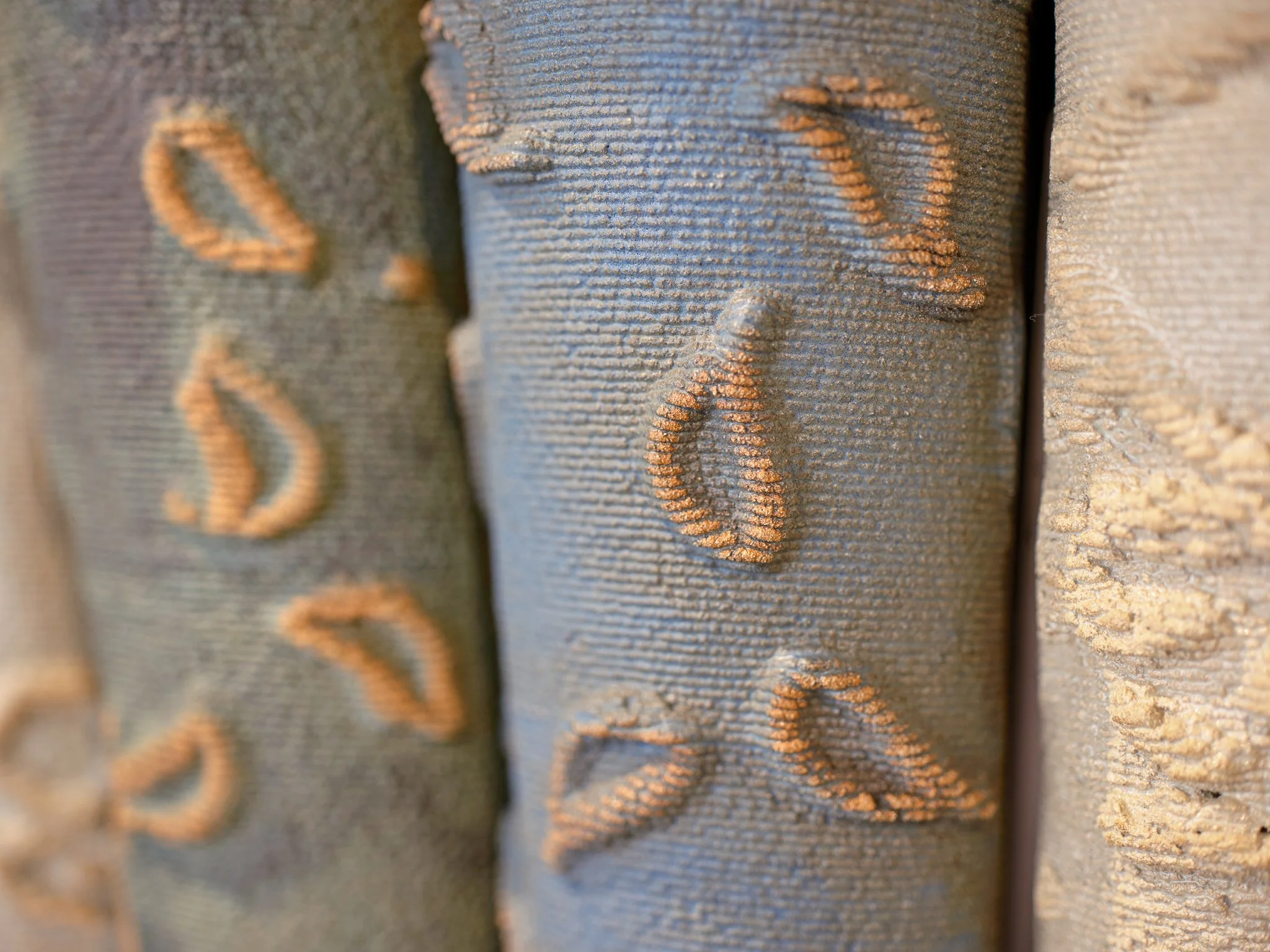
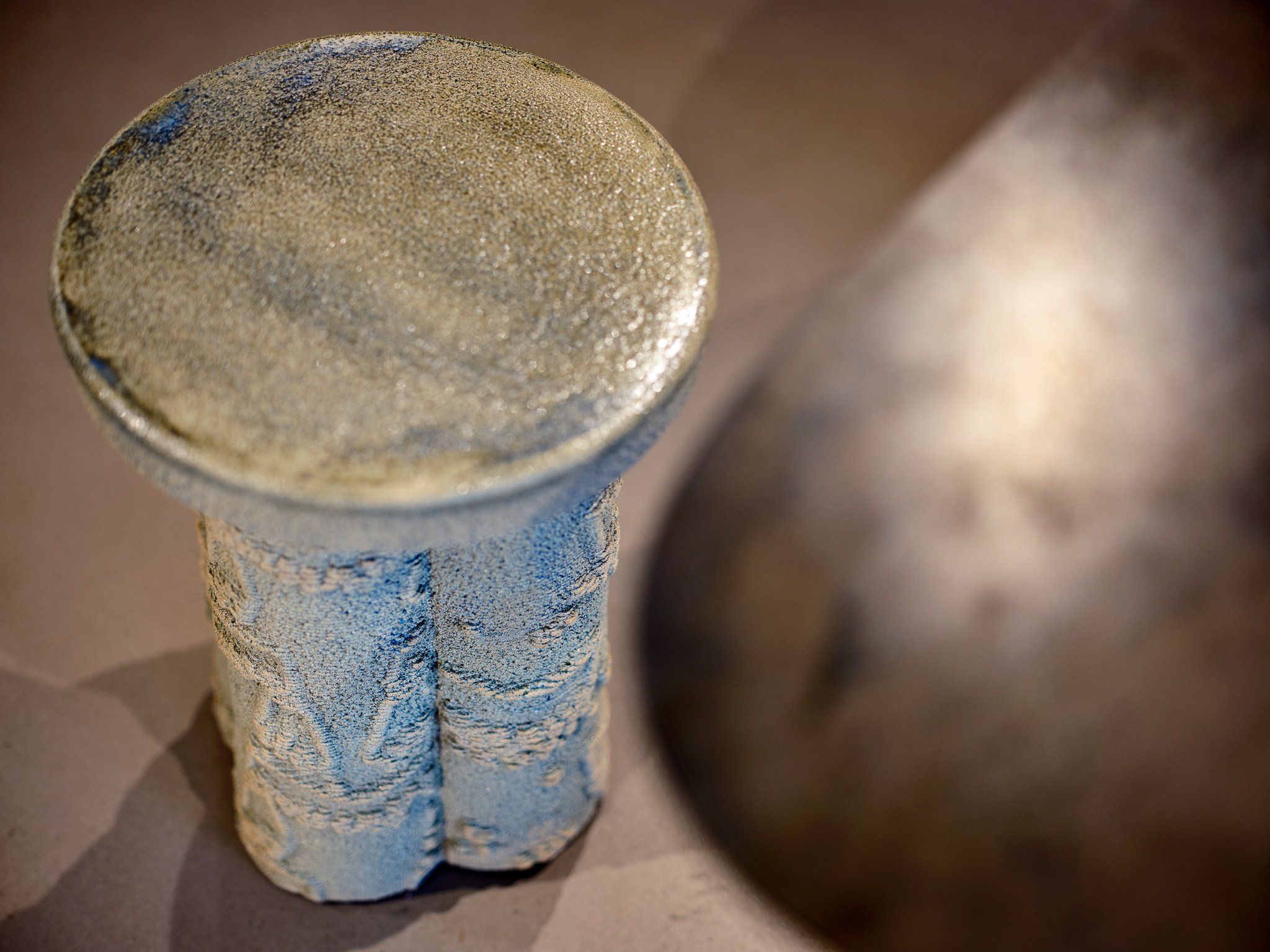
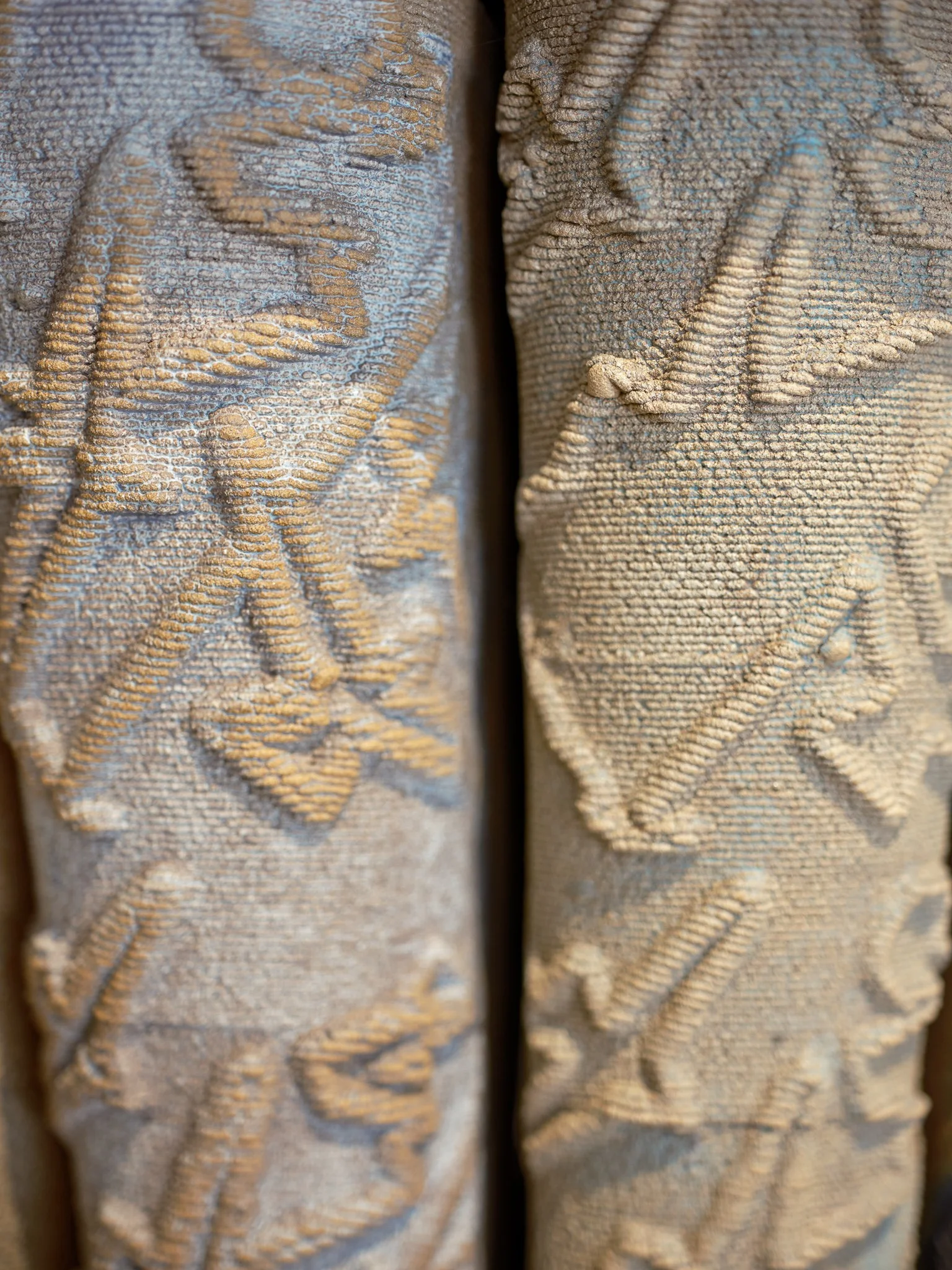
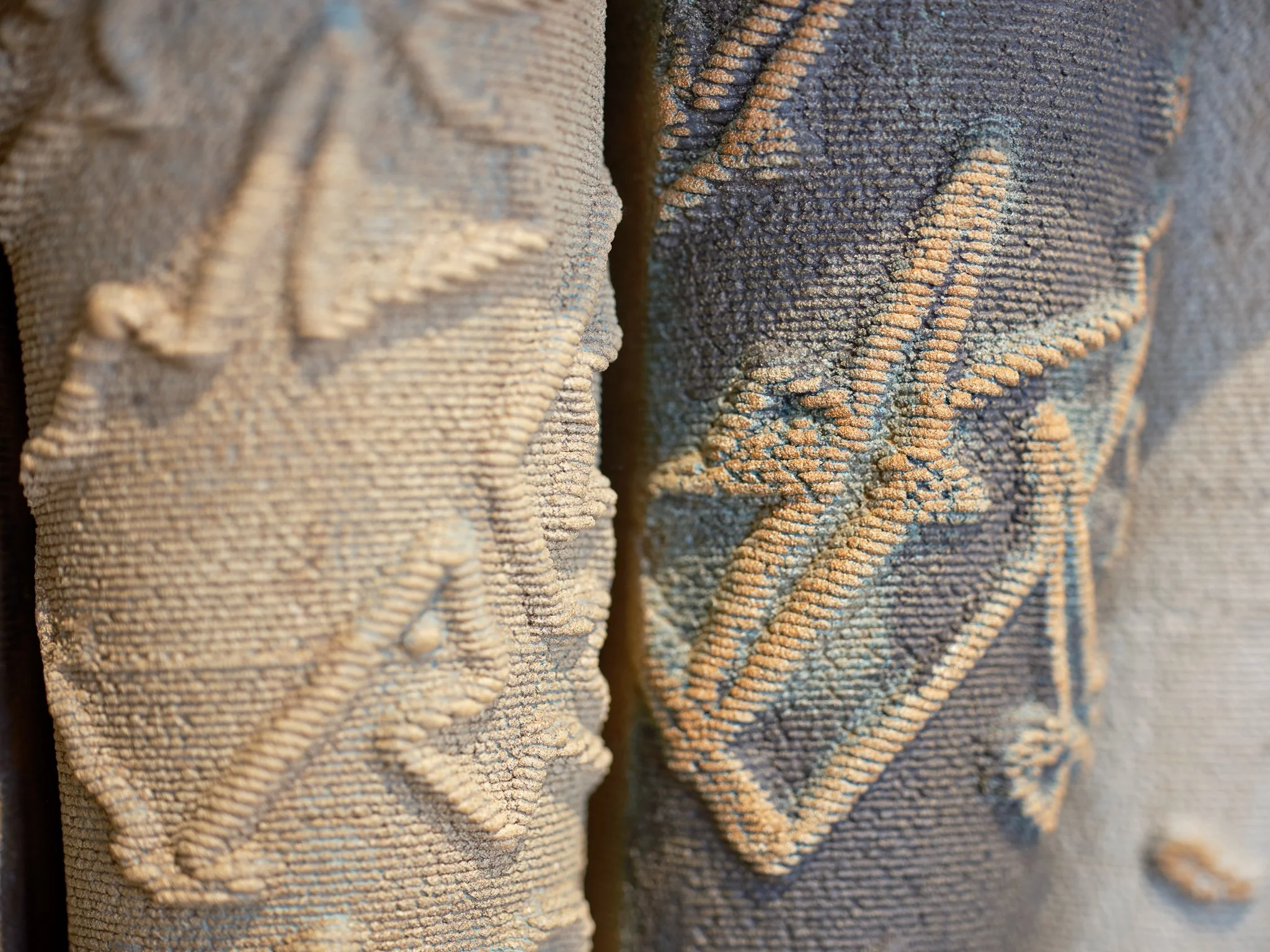
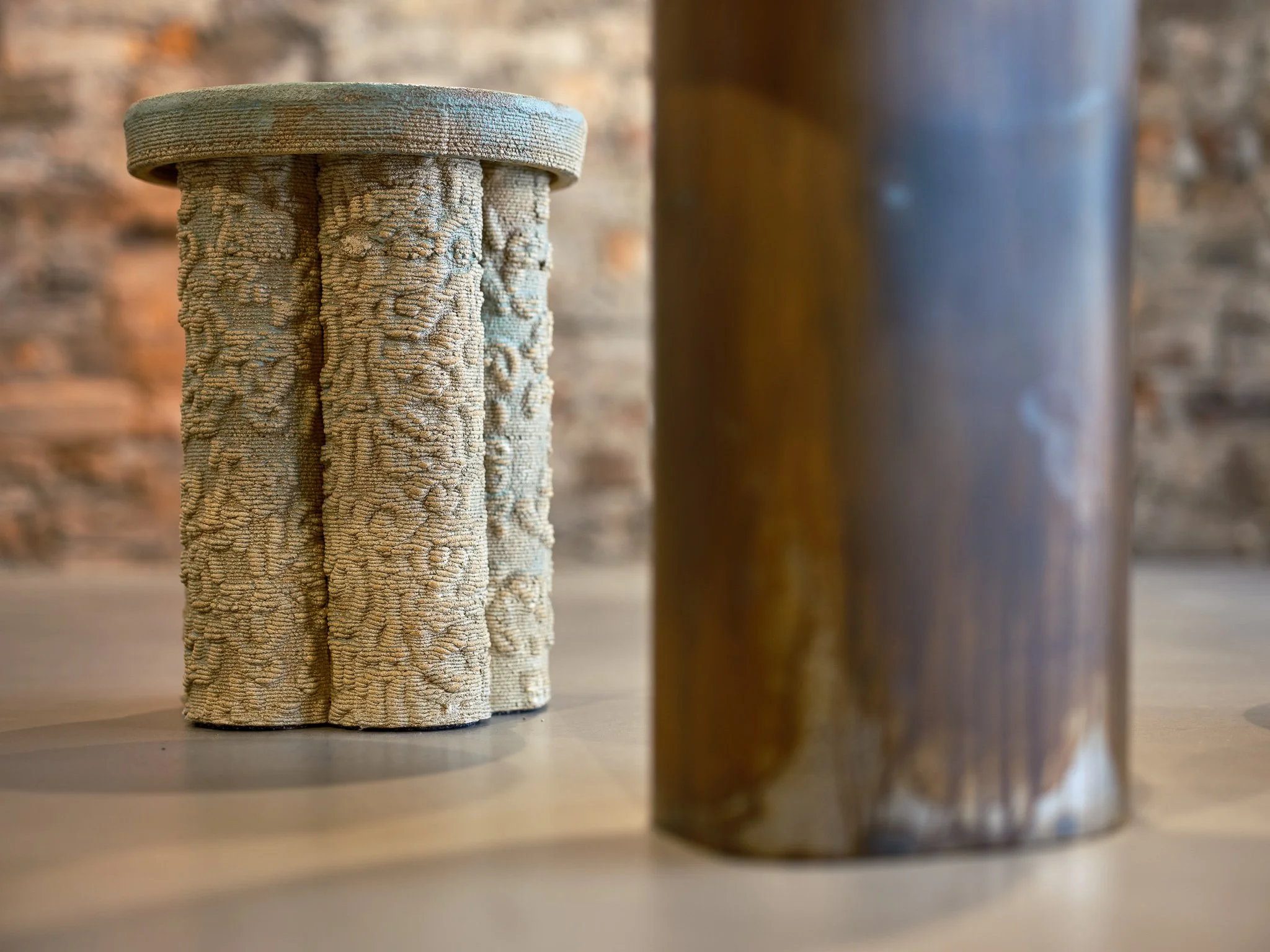
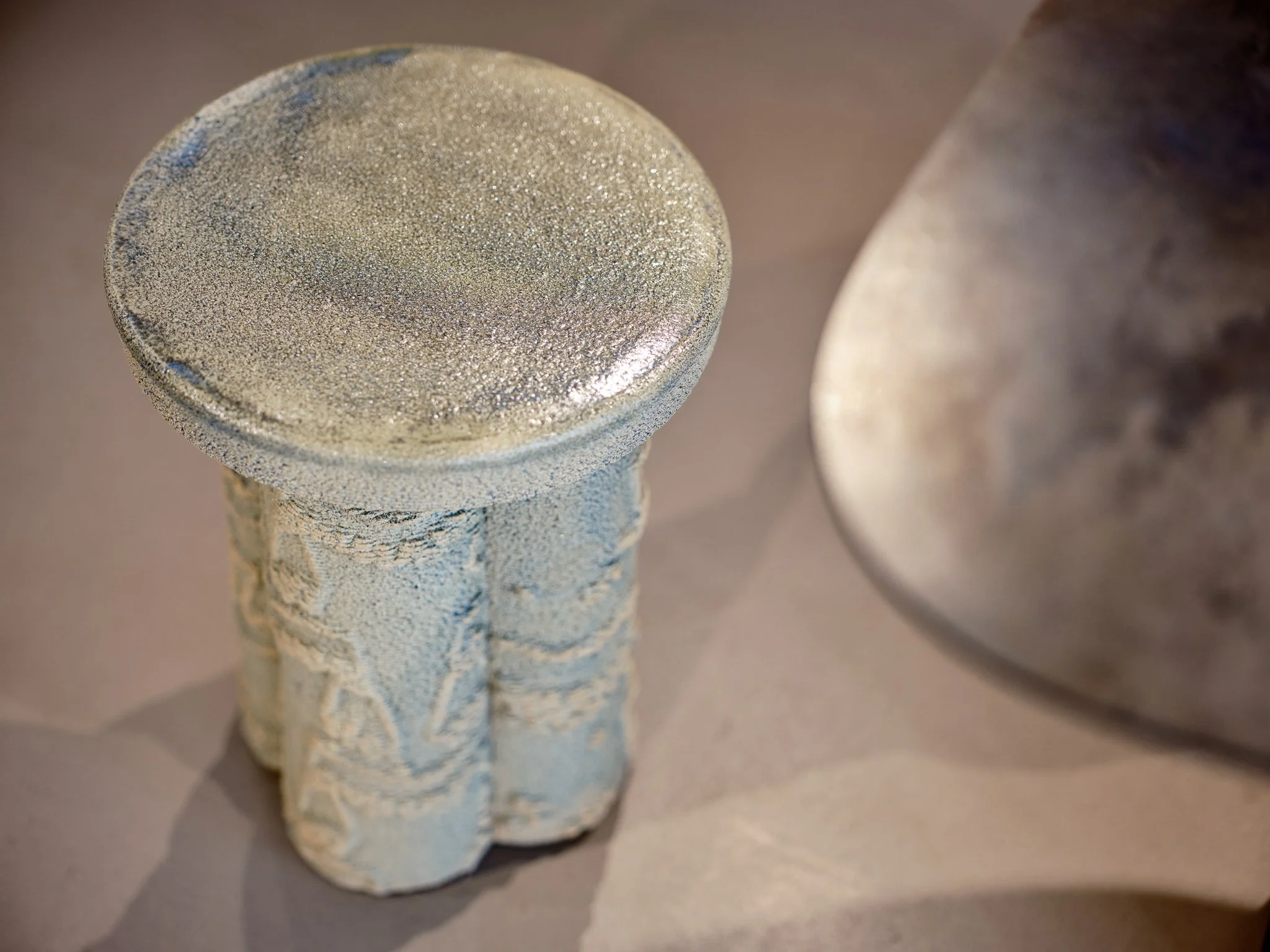
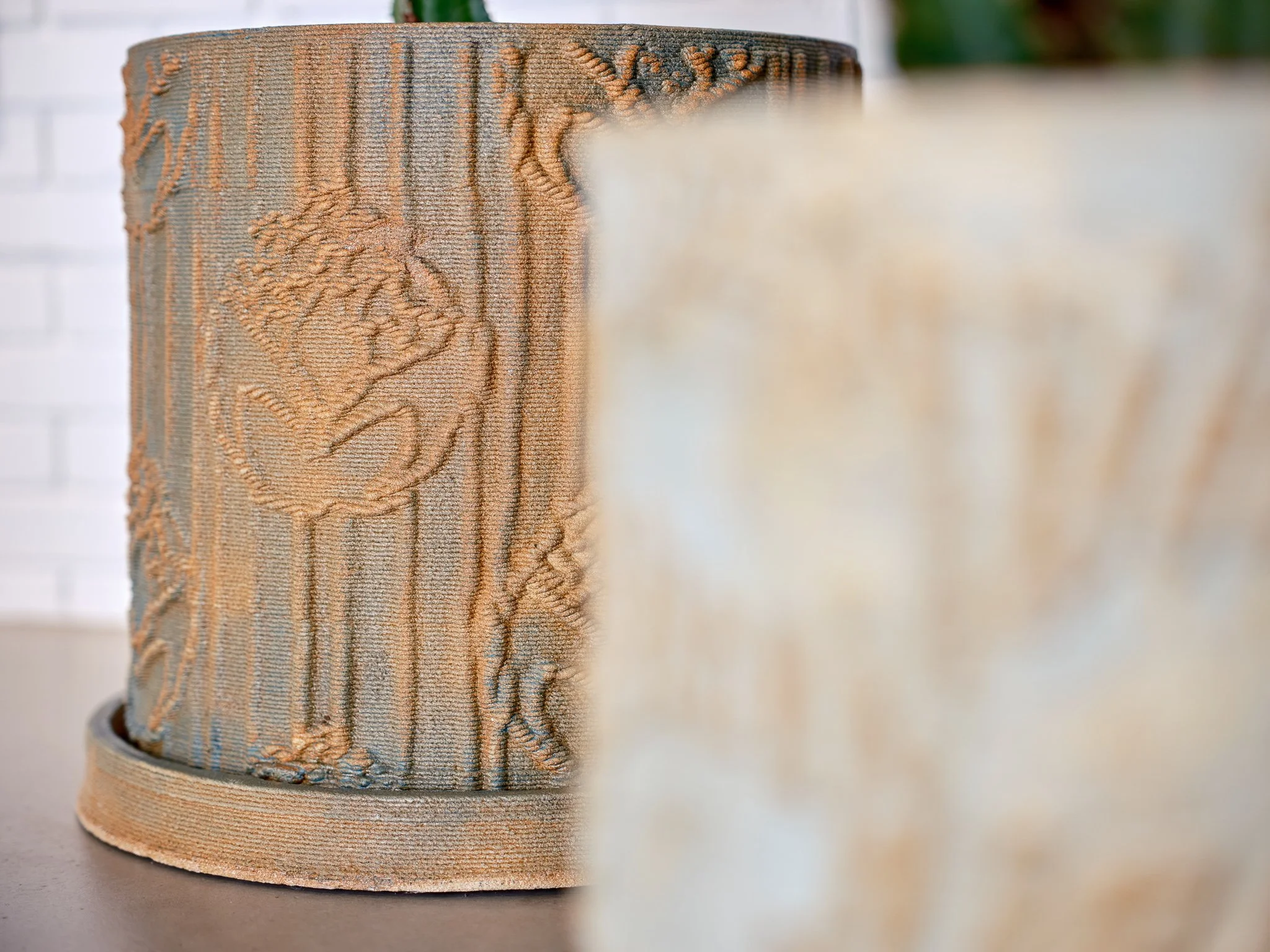
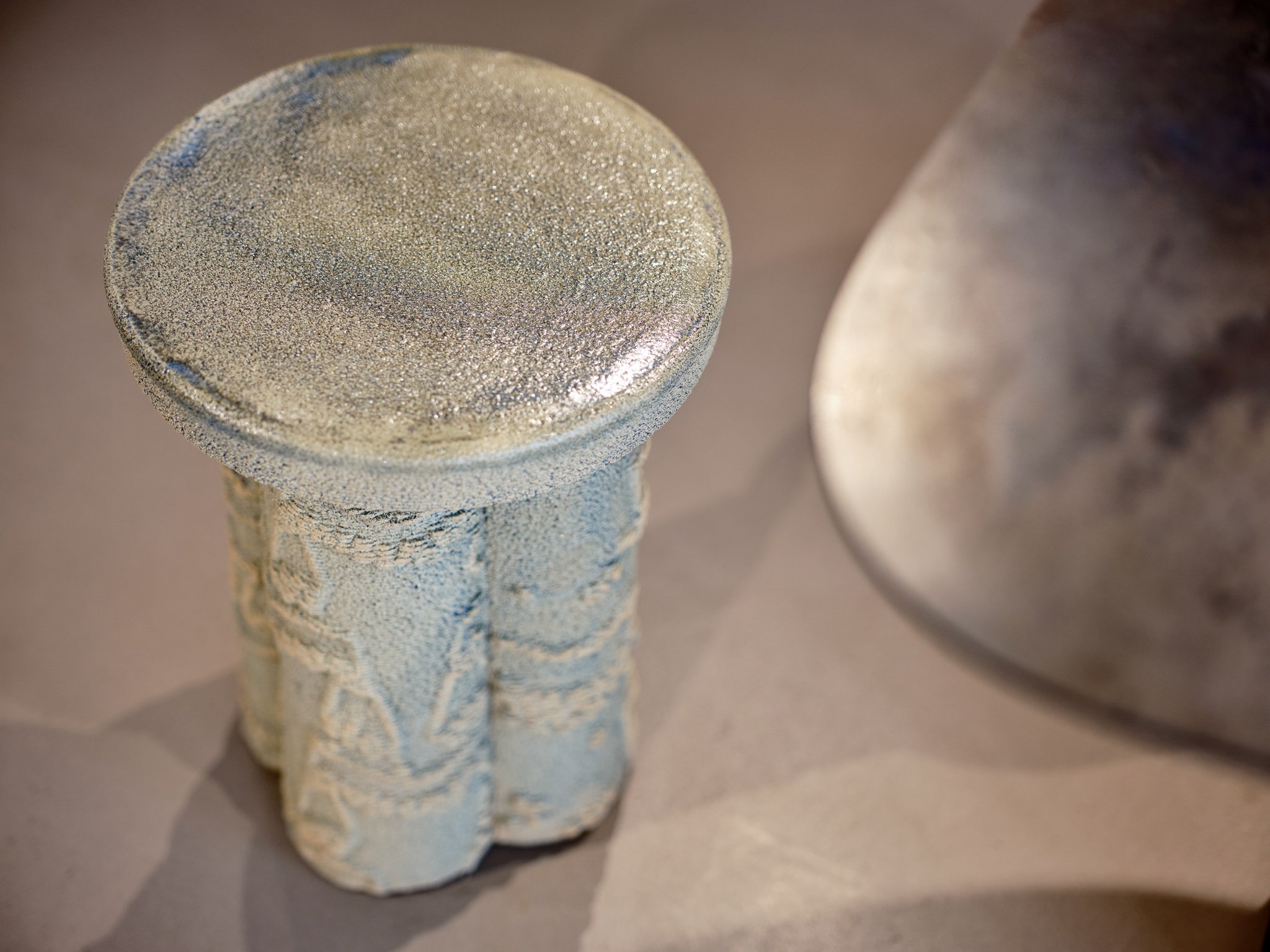
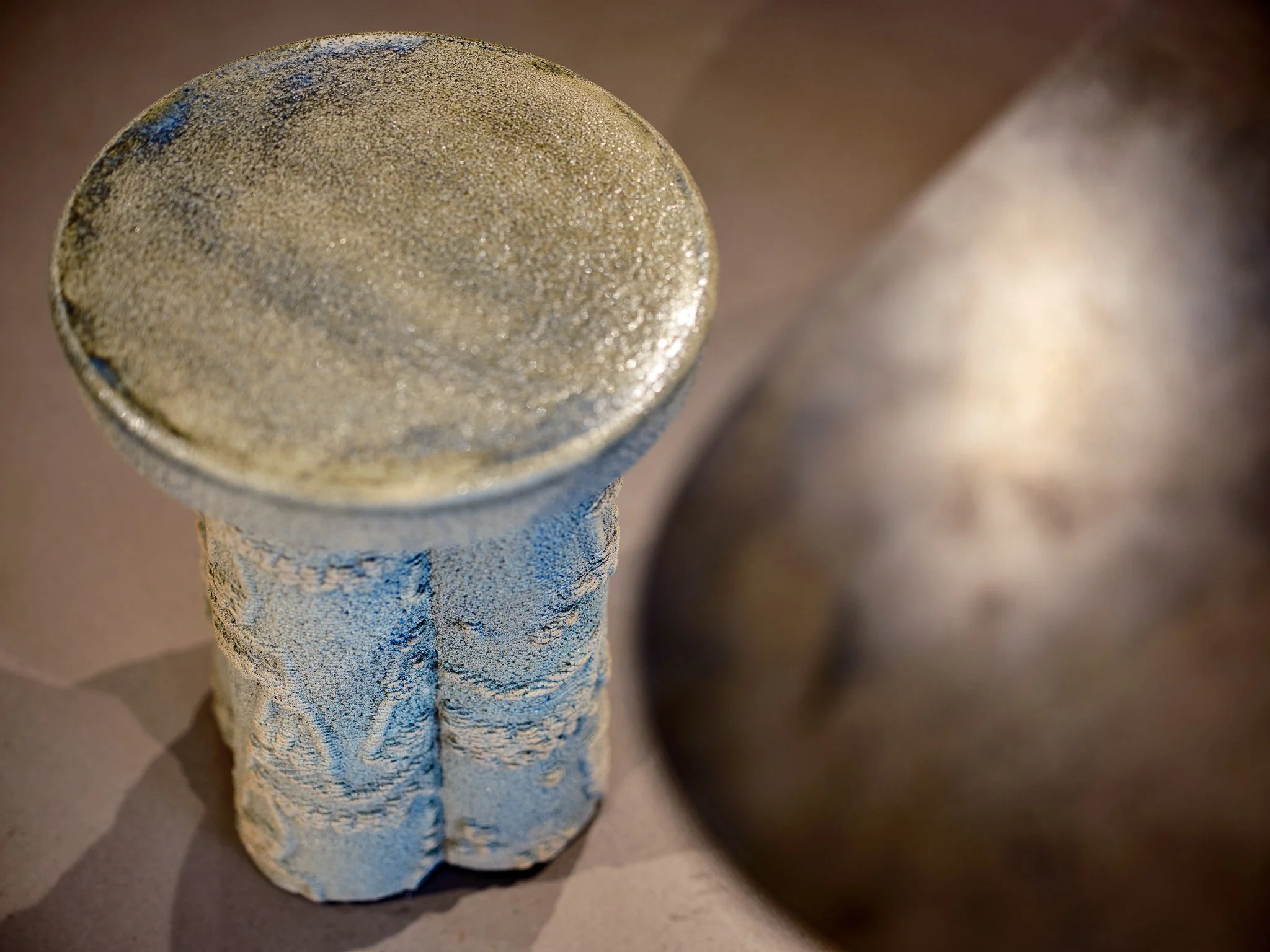
Research into historic printing rollers, embossed plates, woven fabrics and the patina of industrial machinery informed the development of a series of ceramic textures. Impressions, marks and repeating patterns emerge across the surfaces, carrying echoes of the manufacturing processes that once defined the site.
The project exists between analogue craft and digital production.
Traditional ceramic techniques are combined with robotic fabrication, utilising a converted industrial robot adapted to print directly in clay. Through this process, technologies associated with contemporary manufacturing become tools for exploring historic methods of making. Past and future are brought into conversation through material.
The resulting forms avoid rigid geometry and repetition.
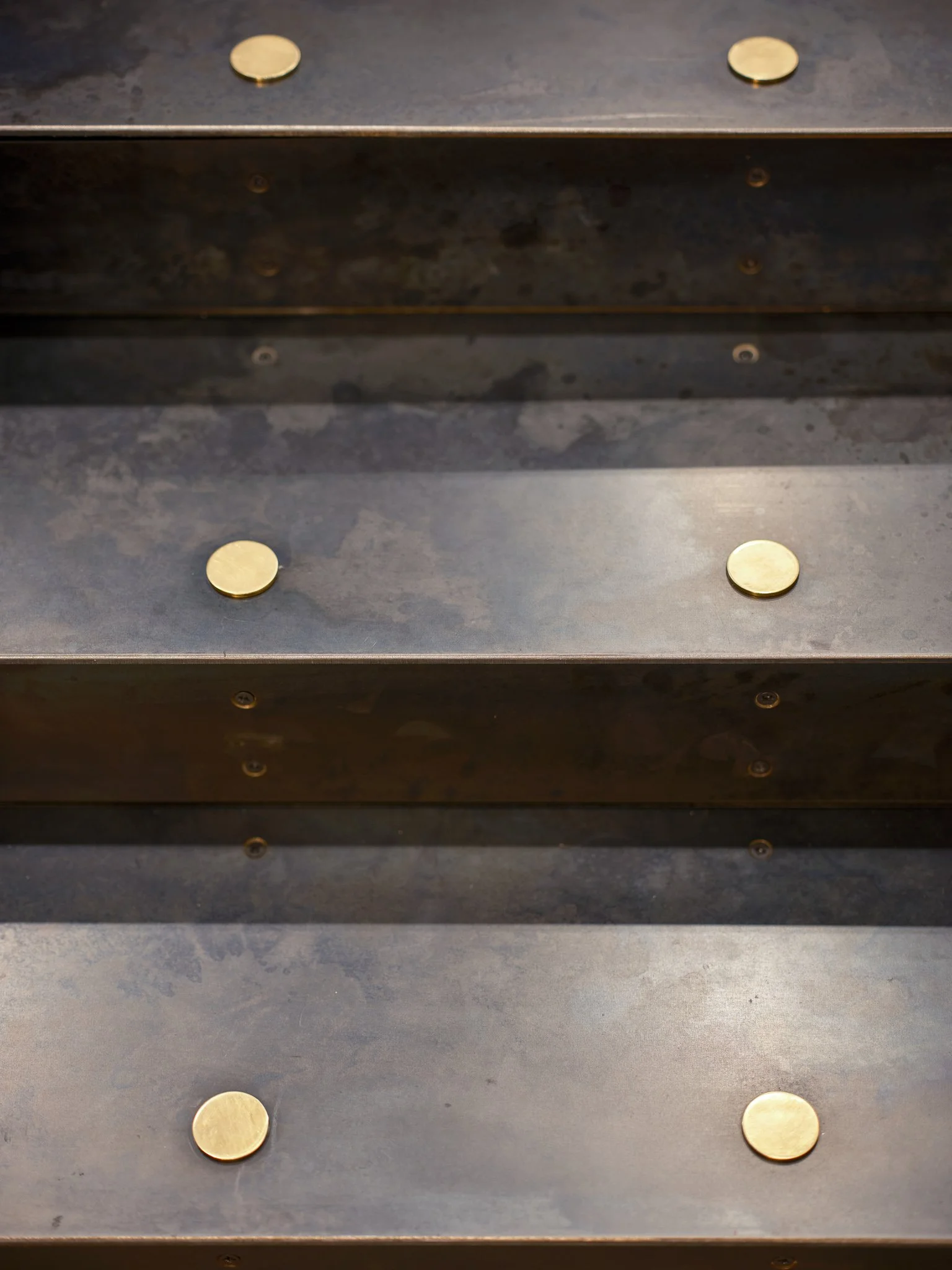
Instead, surfaces appear worn, layered and tactile, celebrating irregularity, texture and evidence of process. Colour and finish draw inspiration from the ageing machinery, pigments and accumulated patinas found within industrial environments, allowing the ceramics to feel simultaneously contemporary and familiar.
Throughout the project, furniture and architectural elements become more than functional objects.
They operate as artefacts of a continuing story. Objects shaped by the history of a place whilst embracing the technologies of the present. Craft is not positioned in opposition to innovation, but as something capable of evolving alongside it.
At its core, Calico is a reflection on making itself.
How knowledge is passed between generations.
How processes adapt and evolve.
How the marks left by industry continue to influence contemporary creative practice.
The work proposes that innovation is rarely about abandoning the past. Instead, it emerges through an ongoing dialogue between heritage, material and imagination.
A conversation between hand and machine.
Between pattern and process.
Between the histories we inherit and the futures we create.
Project Details
Year
2021
Location
Calico, Manchester, UK
Type
Architectural Interior Commission
Elements
Reception Desk, Furniture, Planters, Ceramic Architectural Features
Materials
Robotically printed ceramic, steel, timber
Themes
Craft • Industry • Materiality • Technology • Heritage • Process
Photography
Gunner Gu