About
Liam Hopkins is an artist, designer and maker whose work explores transformation, participation, memory and the stories embedded within materials.
For over two decades, he has worked across the boundaries of art, design, craft and technology, creating public artworks, sculptures, installations and experiences that connect people with places, objects and one another. His practice is driven by a curiosity about how materials, histories and human interaction can be brought together to create new perspectives and shared experiences.
Working through his studio, LAZERIAN, Hopkins combines traditional craftsmanship with contemporary technologies, blending hand-making, digital fabrication and storytelling to create works that are both visually engaging and rich in meaning. From large-scale public sculptures and immersive installations to artist-led interventions and participatory experiences, each project begins with a desire to uncover hidden narratives and transform them into something unexpected.
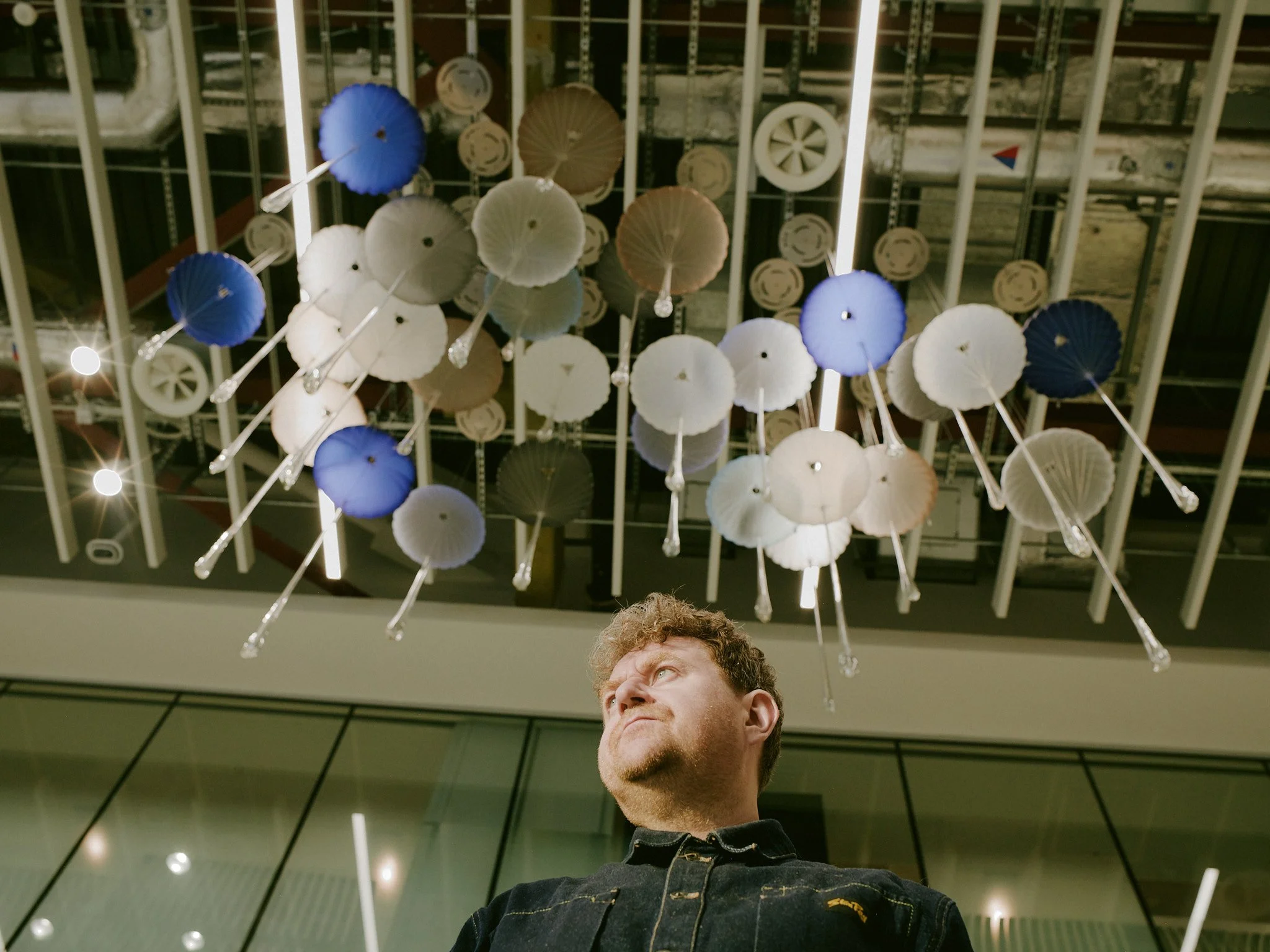
Throughout his career, Hopkins has developed a distinctive approach that often draws upon heritage, play, community engagement and material reuse. Whether repurposing historic airport chandeliers into a suspended installation, transforming donated musical instruments into sculptural landmarks, or creating artworks from reclaimed and overlooked materials, his work seeks to reveal new value in the familiar and encourage audiences to see the world differently.
His projects have been exhibited internationally and are held in collections including the Moscow Design Museum, Museo Poldi Pezzoli in Milan and Manchester Art Gallery. Recent works include Atmospheric Reflections of the North for Manchester Airport, Centre of Possibility at the Saatchi Gallery for The FA, Cathedral of Sound for Manchester's Music for the Senses trail, and international installations exhibited in Geneva, Switzerland.
At the heart of Hopkins' practice is a belief that creativity has the power to bring people together. Through sculpture, installation and public art, he creates opportunities for participation, conversation and discovery, inviting audiences to engage not only with the finished work, but with the stories, processes and possibilities that shaped it.
Based in Manchester, UK, Liam continues to develop new commissions, exhibitions and collaborations that explore the relationship between people, materials and place.